1. Introduction
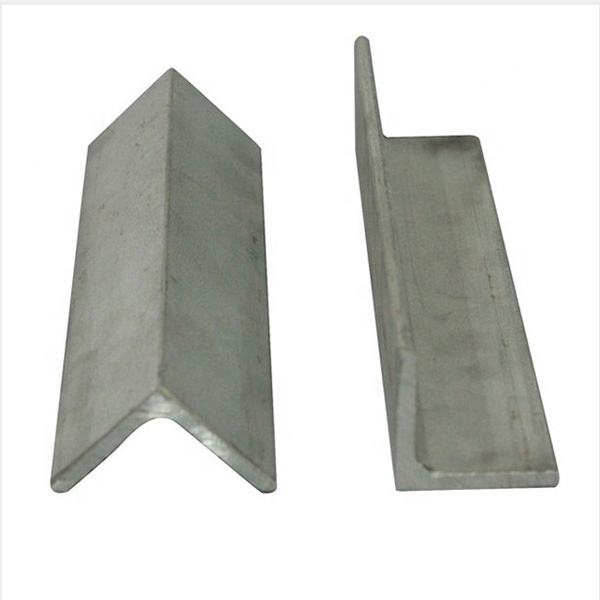
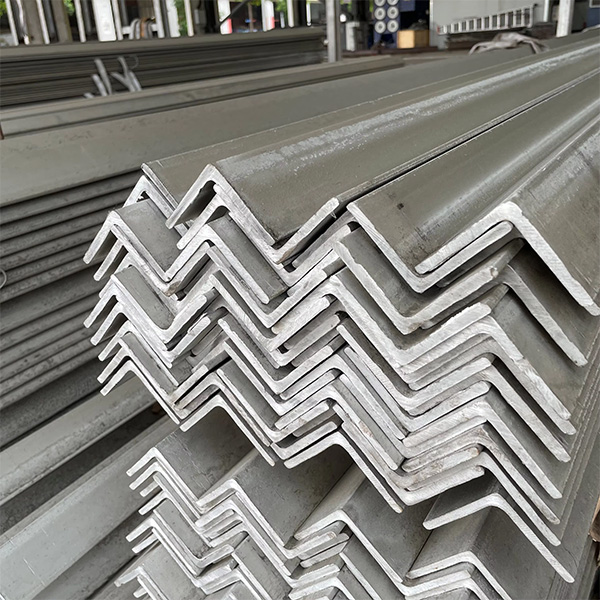
Angle steel bars (also called angle iron, L-sections, or RSA – Rolled Steel Angles) are hot-rolled structural sections with an L-shaped cross-section consisting of two legs meeting at a 90° angle. They are produced in equal-leg (both legs identical length) and unequal-leg (different leg lengths) configurations.
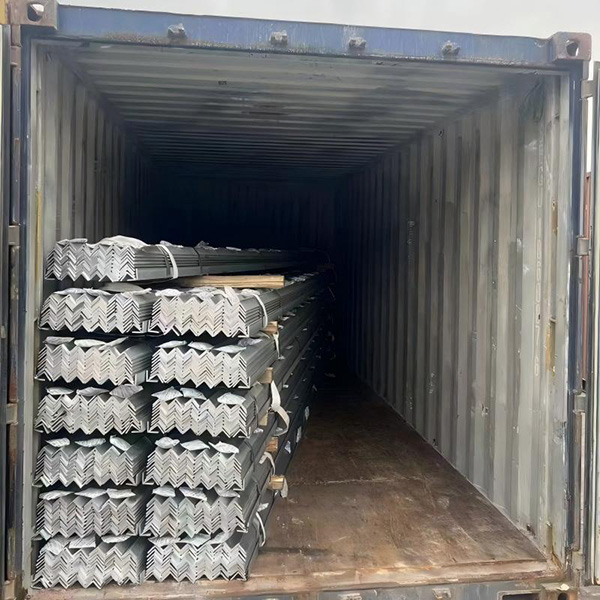
Typical leg lengths range from approximately 20 mm to 250–300 mm, with thicknesses from about 3 mm to 35 mm. Standard lengths are commonly 6 m, 9 m or 12 m (custom lengths 4–18 m available). They are widely used in construction frames, bracing, towers, machinery supports, shipbuilding and general fabrication.
Key international standards include:
• EN 10056-1 / EN 10056-2 – Dimensions, sectional properties and tolerances of hot-rolled equal and unequal leg angles (Europe)
• EN 10025 (Parts 1–6) – Technical delivery conditions for structural steels (material grades)
• ASTM A6/A6M – General requirements for rolled structural steel shapes; ASTM A36, A572, A588, A529 (United States)
• GOST 8509 (equal) / GOST 8510 (unequal) or GOST 35087 – Russian / CIS dimensional standards; GOST 380 / GOST 19281 for grades
• JIS G3192 – Dimensions of hot-rolled steel sections; JIS G3101 / G3106 for material grades (Japan)
• GB/T 706 – Chinese dimensional standard; GB/T 700 / GB/T 1591 for grades
Classification is based primarily on yield strength, impact toughness (Charpy), delivery condition, and intended application (structural, high-strength, weathering). Material grades for angles are essentially the same as those used for plates and other structural shapes under the respective standards.
2. European Standards (EN 10025 + EN 10056)
EN 10056 defines the geometry and tolerances of angles; EN 10025 defines the steel grades. Grades are designated by minimum yield strength (MPa) at thickness ≤16 mm, followed by a quality designation indicating impact toughness.
2.1 Common Structural Grades (EN 10025-2 Non-alloy)
Grade | Yield ≤16 mm (MPa) | Tensile ≤16 mm (MPa) | Typical Elongation | Typical Use |
S235JR/J0/J2 | 235 | 360–510 | ≥24–26% | General construction, light frames, bracing |
S275JR/J0/J2 | 275 | 410–560 | ≥21–23% | Buildings, bridges, industrial frames |
S355JR/J0/J2/K2 | 355 | 470–630 | ≥20–22% | High-rise, heavy bridges, towers, offshore |
S420 / S460 | 420 / 460 | 520–680 / 540–720 | — | Heavy columns, long-span, high-strength bracing |
Quality designations (impact toughness):
• JR – Charpy V-notch ≥27 J at +20 °C
• J0 – ≥27 J at 0 °C
• J2 – ≥27 J at −20 °C
• K2 – ≥40 J at −20 °C (higher toughness)
2.2 Yield Strength vs Thickness (EN 10025)
Minimum yield strength decreases with increasing thickness (same rules as for plates):
Thickness band | S235 | S275 | S355 | S420 | S460 |
≤16 mm | 235 | 275 | 355 | 420 | 460 |
>16–40 mm | 225 | 265 | 345 | 400 | 440 |
>40–63 mm | 215 | 255 | 335 | 390 | 430 |
>63–80 mm | 215 | 245 | 325 | 370 | 410 |
>80–100 mm | 215 | 235 | 315 | 360 | 400 |
2.3 Dimensional Standards (EN 10056)
EN 10056-1 covers dimensions and sectional properties; EN 10056-2 covers tolerances. Common size ranges:
• Equal leg: 20×20×3 mm to 250×250×35 mm
• Unequal leg: 30×20×3 mm to 200×150×18 mm (and similar)
Designation example: L 100×100×10 (equal) or L 150×100×12 (unequal).
2.4 Other EN 10025 Parts Applicable to Angles
• EN 10025-3: Normalised / normalised-rolled fine-grain steels (S275N/NL, S355N/NL, S420N/NL, S460N/NL)
• EN 10025-4: Thermomechanically rolled fine-grain steels (S275M/ML, S355M/ML, S420M/ML, S460M/ML)
• EN 10025-5: Steels with improved atmospheric corrosion resistance (weathering steels, e.g. S355J0W, S355J2W)
• EN 10025-6: Quenched and tempered high-strength steels (S460Q/QL to S960Q/QL) – less common in angles but available for special applications
3. United States Standards (ASTM)
ASTM A6/A6M governs dimensional requirements and tolerances for structural shapes including angles. Material grades are covered by separate specifications.
3.1 Common Structural & HSLA Grades
Grade / Spec | Min Yield (MPa) | Tensile (MPa) | Typical Applications / Notes |
ASTM A36 | 250 (36 ksi) | 400–550 | General structural, buildings, towers, frames; most common carbon angle |
ASTM A572 Gr.42 | 290 | 415 min | HSLA structural |
ASTM A572 Gr.50 | 345 (50 ksi) | 450 min | High-strength structural; ≈ S355; preferred modern grade for angles |
ASTM A572 Gr.55/60/65 | 380–450 | 485–550 min | Higher-strength HSLA applications |
ASTM A529 Gr.50/55 | 345 / 380 | 485–655 / 550–700 | Carbon-manganese high-strength angles |
ASTM A588 | 345 (50 ksi) | 485 min | Weathering steel angles (atmospheric corrosion resistance) |
ASTM A709 | Various | Various | Bridge steels (includes weathering grades) |
Note: Many mills dual-certify angles to both A36 and A572 Grade 50. A572 Gr.50 is increasingly the preferred specification for structural angles in the US.
3.2 Typical Size Ranges (ASTM A6)
• Equal leg: approximately L1×1×1/8 to L8×8×1 (25–203 mm leg)
• Unequal leg: wide range, e.g. L3×2 to L8×6 and larger
Designation example: L4×4×3/8 (equal) or L6×4×1/2 (unequal).
4. CIS / Russian Standards
Common GOST specifications for hot-rolled angles include GOST 8509 (equal leg), GOST 8510 (unequal leg), with the newer GOST 35087-2024 covering rolled steel sections. Material grades follow GOST 380 (carbon) and GOST 19281 (high-strength low-alloy).
• St3ps / St3sp – Ordinary carbon structural (≈ S235 / A36)
• 09G2S, 10HSND, 15HSND – Low-alloy structural / bridge steels (≈ S355 / A572 Gr.50)
• Q235 / Q345 equivalents under Chinese GB/T also widely referenced in the region
• Delivery conditions: hot-rolled, normalised, thermomechanically rolled
5. Approximate Cross-Standard Grade Equivalences
The following table provides commonly accepted approximate equivalences for commercial structural grades used for angle bars. Exact chemical and mechanical requirements (especially impact toughness and thickness ranges) should always be verified against the specific standard edition.
EN 10025 | ASTM | JIS (approx.) | China / GOST / Other |
S235JR | A36 / A283 Gr.D | SS400 | Q235B / St3sp |
S275JR | A36 (higher) / A572 Gr.42 | SS490 | Q275 / St4sp |
S355JR / J2 | A572 Gr.50 | SM490A/B | Q345B / Q355 / 09G2S |
S420 / S460 | A572 Gr.60/65 | SM520 / SM570 | Q420 / Q460 |
S355J2W (weathering) | A588 / A709 Gr.50W | SPA-H | Q355NH |
6. High-Strength & Special Grades
Quenched & tempered (EN 10025-6 / ASTM A514):
• S460Q/QL to S960Q/QL – Yield 460–960 MPa (limited availability in angle form)
• ASTM A514 – Typical yield 620–690 MPa (more common as plate; special order for angles)
Thermomechanically rolled for cold forming (EN 10149-2):
• S315MC, S355MC, S420MC, S460MC, S500MC … up to S960MC – primarily for strip-based or cold-formed angles; hot-rolled structural angles more commonly use EN 10025 grades
Weathering steels:
• EN: S235J0W, S355J0W, S355J2W, S355K2W
• ASTM: A588, A709 Gr.50W
• JIS: SPA-H
7. Typical Applications
• Construction & buildings: frames, columns, beams, roof trusses, wall bracing, lintels (S235–S355 / A36–A572 Gr.50)
• Bridges & infrastructure: bracing members, connection details, secondary members
• Transmission towers & telecom masts: lattice structures (often high-strength or weathering grades)
• Shipbuilding & offshore: hull stiffeners, platforms, secondary structures
• Machinery & equipment: frames, supports, brackets, guards
• Pipelines & industrial plants: supports, walkways, platforms
• General fabrication: shelving, racks, trailers, agricultural equipment
8. Important Notes
• Yield strength decreases with increasing thickness; always use the value corresponding to the ordered thickness.
• Impact toughness (Charpy) requirements and test temperature are critical for low-temperature or structural safety applications.
• Delivery condition (as-rolled, normalised +N, thermomechanically rolled +M, quenched & tempered +Q) significantly affects properties and weldability.
• Carbon equivalent (CEV) limits control weldability; higher-strength grades generally require preheat or special welding procedures.
• Equal-leg angles provide symmetrical properties about both principal axes; unequal-leg angles are useful when different stiffness or connection geometry is required.
• Dimensional tolerances are defined in EN 10056-2 (Europe) and ASTM A6/A6M (US); always confirm mill certificates for critical projects.
• AOIN supply equal and unequal angles in thicknesses from ~3 mm to 35 mm, leg lengths up to 250–300 mm, and lengths up to 12–18 m in grades from S235 to S460 (and ASTM equivalents), in hot-rolled, normalised and TM conditions.