1. Introduction
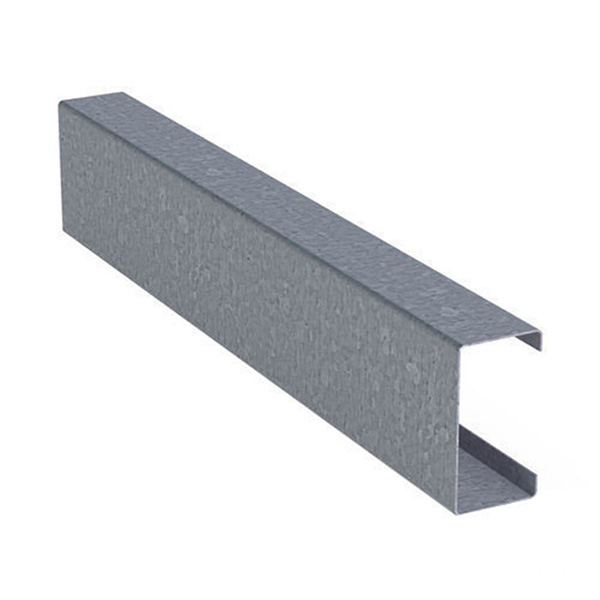
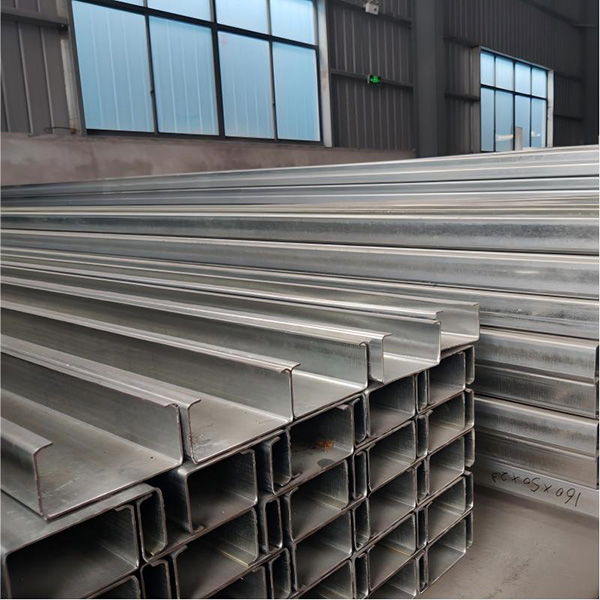
C-purlins (also called C-sections or C-shaped purlins) are cold-formed structural steel members with a C-shaped cross-section, typically featuring lips on the flanges. They are primarily used as secondary framing members — roof purlins and wall girts — to support roof and wall cladding in industrial, commercial and agricultural buildings.
Unlike hot-rolled U-channels, modern C-purlins are almost always produced by roll-forming galvanized or pre-painted steel coil at room temperature. This cold-forming process increases yield strength and allows thinner, lighter sections with high dimensional accuracy. Depths commonly range from about 100 mm to 300–350 mm, with thicknesses from 1.2 mm to 3.5 mm (occasionally higher). Standard lengths are cut to order, often 6–12 m or project-specific.
Key international standards include:
• EN 10346 – Continuously hot-dip coated steel flat products for cold forming (material grades, e.g. S350GD, S450GD)
• EN 10162 – Cold-rolled steel sections – Technical delivery conditions – Dimensional and cross-sectional tolerances
• EN 1993-1-3 (Eurocode 3) – Design of steel structures – Cold-formed members and sheeting
• AS 1397 – Continuous hot-dip metallic coated steel sheet and strip (G250, G300, G350, G450, G500, G550)
• ASTM A653 / A1003 – Steel sheet, zinc-coated (galvanized) for structural use; ASTM A36 / A572 sometimes referenced for heavier hot-rolled alternatives
• JIS G 3302 / G 3350 – Japanese galvanized and cold-formed section standards
• GB/T and local national standards for coated steel and cold-formed sections
Classification is based primarily on yield strength of the base metal (or as-formed strength), coating mass (e.g. Z275), thickness, and intended application (purlins, girts, secondary framing).
2. European Standards (EN 10346 + EN 10162)
EN 10346 covers continuously hot-dip coated (galvanized, galvalume, etc.) steel flat products used as feedstock for cold-formed purlins. EN 10162 covers dimensional and cross-sectional tolerances of the finished cold-rolled sections. Design is governed by Eurocode 3 Part 1-3.
2.1 Common Construction Steel Grades (EN 10346)
Grade | Yield (MPa) | Tensile (MPa) | Elongation % | Typical |
S220GD | 220 | 300 | ≥20% | Light-duty secondary members |
S250GD | 250 | 330 | ≥19% | General light purlins / girts |
S280GD | 280 | 360 | ≥18% | Medium-duty applications |
S320GD | 320 | 390 | ≥17% | Standard structural purlins |
S350GD | 350 | 420 | ≥16% | Most common high-strength purlin grade |
S390GD / S420GD / S450GD | 390 / 420 / 450 | 460 / 480 / 510 | ≥15–16% | High-strength / long-span applications |
Coating designations commonly used with these grades include +Z (zinc), +ZA (zinc-aluminium), +AZ (aluminium-zinc), with typical mass Z275 (275 g/m² total both sides).
2.2 Dimensional Standards & Tolerances
EN 10162 specifies dimensional and cross-sectional tolerances for cold-rolled steel sections. Typical C-purlin size ranges:
• Web depth: approximately 100–350 mm
• Flange width: 40–100 mm (depending on depth)
• Lip length: 10–25 mm
• Thickness: 1.2–3.5 mm (most common 1.5–2.5 mm)
Designation example: C200×70×20×2.0 (depth × flange × lip × thickness).
3. Australian & Related Standards (AS 1397)
AS 1397 is widely used in Australia, New Zealand and many export markets for continuous hot-dip metallic coated steel. Grades are designated by minimum yield strength:
Grade | Yield (MPa) | Tensile (MPa) | Elongation % | Typical Use |
G250 | 250 | 320 | ≥22% | Light-duty / non-structural |
G300 | 300 | 340 | ≥18% | General secondary framing |
G350 | 350 | 420 | ≥14–15% | Standard structural purlins |
G450 | 450 | 480 | ≥9–10% | High-strength / long-span purlins (very common) |
G500 / G550 | 500 / 550 | 520 / 550 | ≥8% / ≥2% | Very high strength, specialised applications |
4. United States Standards (ASTM)
Cold-formed C-purlins in North America are typically produced from galvanized sheet conforming to ASTM A653 (or A1003 for structural use). Higher-strength grades are preferred for efficiency.
Grade / Spec | Min Yield (MPa) | Tensile (MPa) | Typical Applications / Notes |
ASTM A653 SS Grade 33/40/50 | 230 / 275 / 340 | 310 / 380 / 450+ | Common galvanized structural sheet grades |
ASTM A1003 | Various | Various | Steel sheet for cold-formed steel framing members |
A36 / A572 (hot-rolled alt.) | 250 / 345 | 400–550 / 450+ | Heavier hot-rolled C-channels sometimes used as purlins |
Zinc coating mass is commonly G90 (≈ Z275) or higher for exterior exposure.
5. Approximate Cross-Standard Grade Equivalences
The following table provides approximate equivalences for common cold-formed / coated steel grades used for C-purlins. Exact requirements (especially coating, elongation and chemical limits) must be verified against the ordered specification.
EN 10346 | AS 1397 | ASTM (approx.) | Other / Notes |
S250GD | G250 / G300 | SS Grade 33/40 | Light-duty |
S350GD | G350 | SS Grade 50 | Standard structural |
S450GD | G450 | High-strength SS50+ | High-tensile / long-span (very common) |
S550GD (limited) | G500 / G550 | Very high strength | Specialised applications |
6. High-Strength Grades & Coatings
High-tensile grades:
• G450 / S450GD and higher – preferred for longer spans and heavier loads; allow thinner sections and weight savings
• Cold-forming further increases effective yield strength compared with the base coil
Common coatings:
• Zinc (Z): Z100, Z200, Z275 (most common), Z350, Z450 – mass in g/m² total both sides
• Zinc-aluminium (ZA) or aluminium-zinc (AZ / Galvalume) for enhanced corrosion resistance
• Pre-painted (coil-coated) options available for architectural or specific environmental requirements
7. Typical Applications
• Roof purlins – primary use, supporting metal roof cladding between rafters or portal frames
• Wall girts – supporting wall cladding and transferring wind loads
• Secondary framing in industrial, commercial, agricultural and warehouse buildings
• Mezzanine floors, partitions and light structural frames
• Canopies, carports and lightweight structures
• Occasionally used as light beams or in modular construction
8. Important Notes
• C-purlins are cold-formed; their design is governed by cold-formed steel codes (EN 1993-1-3, AISI S100, AS/NZS 4600, etc.), not the same rules as hot-rolled sections.
• Effective section properties (accounting for local buckling) must be used in design; manufacturers normally publish effective Ix, Zx, etc.
• Zinc coating mass (e.g. Z275) is critical for corrosion protection in exterior or aggressive environments.
• Thickness and grade selection depend on span, load (dead, live, wind, snow) and deflection limits; engineering calculations are required.
• C-purlins are usually supplied cut-to-length with pre-punched holes for bolting to cleats or rafters.
• Z-purlins (overlapping at supports) are often preferred for continuous multi-span applications; C-purlins are simpler for single spans.
• Hot-rolled U-channels (previous document) can be used as heavier purlins but are less efficient and heavier than modern cold-formed C-sections.