1. Introduction
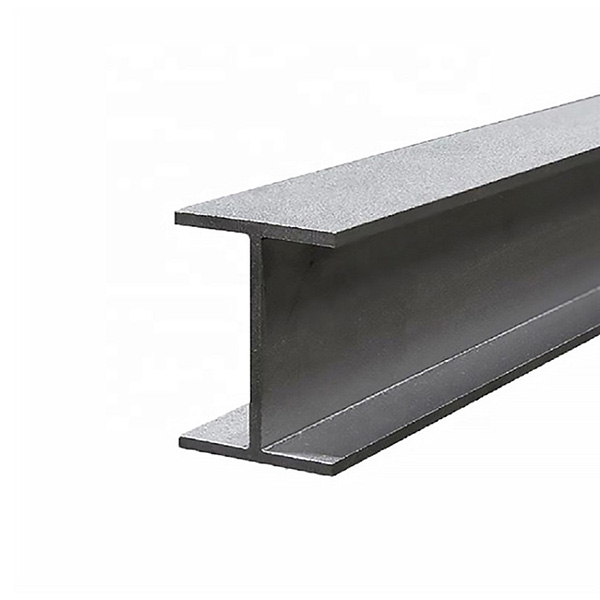
H-beams (also called wide-flange beams, W-shapes, HE sections or H-sections) are hot-rolled structural steel beams with an H-shaped cross-section consisting of two parallel flanges connected by a web. The flanges are typically wider and thicker relative to the web than in traditional I-beams, providing excellent bending and axial load capacity.
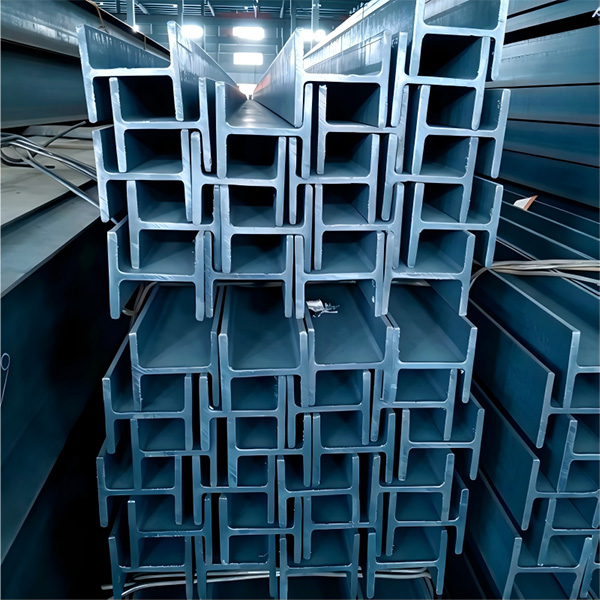
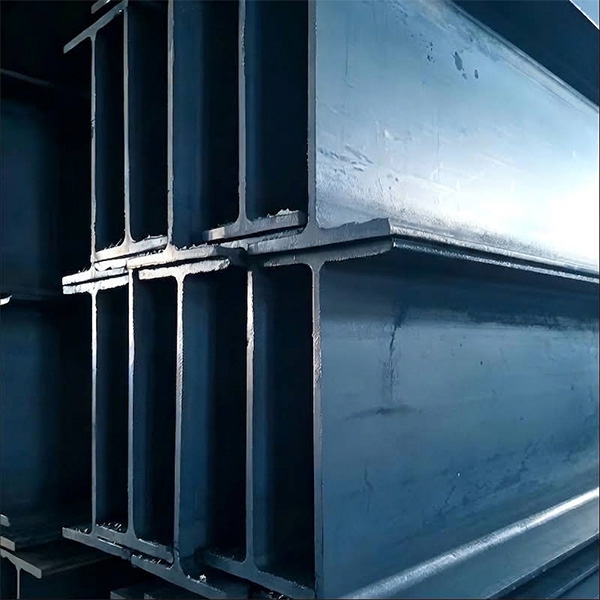
Typical depths range from about 100 mm to 1000 mm (and larger in some series). Standard lengths are commonly 6 m, 9 m, 12 m or cut-to-length. They are the primary members in building frames, bridges, industrial structures, columns and heavy machinery supports.
Key international standards include:
• EN 10365 – Hot-rolled steel channels, I and H sections – Dimensions and masses (Europe)
• EN 10034 – Structural steel I and H sections – Tolerances on shape and dimensions
• EN 10025 (Parts 1–6) – Technical delivery conditions for structural steels (material grades)
• ASTM A6/A6M – General requirements for rolled structural steel shapes; ASTM A36, A572, A992, A588, A913 (United States) – W-shapes
• GOST 26020 / GOST 8239 – Russian / CIS dimensional standards for H and I beams
• JIS G 3192 / JIS G 3101 / G 3106 – Japanese dimensional and material standards
• GB/T 11263 / GB/T 700 / GB/T 1591 – Chinese standards for H-beams and grades
Classification is based primarily on yield strength, impact toughness (Charpy), delivery condition, and intended application. Material grades for H-beams are essentially the same as those used for plates and other structural sections under the respective standards.
2. European Standards (EN 10025 + EN 10365 / EN 10034)
EN 10365 defines nominal dimensions and masses of hot-rolled H and I sections; EN 10034 defines tolerances. Main series include:
• HEA – Light wide-flange beams (thinner flanges)
• HEB – Standard wide-flange beams
• HEM – Heavy wide-flange beams (thicker flanges)
• IPE – Parallel-flange I-beams (narrower flanges)
• HD, HL, HP – Columns, extra-wide and bearing piles
Grades are designated by minimum yield strength (MPa) at thickness ≤16 mm, followed by a quality designation indicating impact toughness.
2.1 Common Structural Grades (EN 10025-2 Non-alloy)
Grade | Yield ≤16 mm (MPa) | Tensile ≤16 mm (MPa) | Typical Elongation | Typical Use |
S235JR/J0/J2 | 235 | 360–510 | ≥24–26% | General construction, light frames |
S275JR/J0/J2 | 275 | 410–560 | ≥21–23% | Buildings, industrial frames, bridges |
S355JR/J0/J2/K2 | 355 | 470–630 | ≥20–22% | High-rise, heavy bridges, offshore, primary frames |
S420 / S460 | 420 / 460 | 520–680 / 540–720 | — | High-strength columns and long-span beams |
Quality designations (impact toughness):
• JR – Charpy V-notch ≥27 J at +20 °C
• J0 – ≥27 J at 0 °C
• J2 – ≥27 J at −20 °C
• K2 – ≥40 J at −20 °C (higher toughness)
2.2 Yield Strength vs Thickness (EN 10025)
Minimum yield strength decreases with increasing thickness (same rules as for plates and other sections):
Thickness band | S235 | S275 | S355 | S420 | S460 |
≤16 mm | 235 | 275 | 355 | 420 | 460 |
>16–40 mm | 225 | 265 | 345 | 400 | 440 |
>40–63 mm | 215 | 255 | 335 | 390 | 430 |
>63–80 mm | 215 | 245 | 325 | 370 | 410 |
>80–100 mm | 215 | 235 | 315 | 360 | 400 |
2.3 Dimensional Standards (EN 10365 / EN 10034)
Common size ranges:
• HEA / HEB / HEM: depths approximately 100–1000 mm
• IPE: depths approximately 80–600 mm
Designation example: HEB 300 or HEA 200 – steel EN 10025-2 – S355JR.
Tolerances (EN 10034): height, flange width, web/flange thickness, out-of-squareness, web off-centre, straightness and mass are controlled; exact limits depend on size.
2.4 Other EN 10025 Parts Applicable to H-Beams
• EN 10025-3: Normalised / normalised-rolled fine-grain steels (S275N/NL, S355N/NL, S420N/NL, S460N/NL)
• EN 10025-4: Thermomechanically rolled fine-grain steels (S275M/ML, S355M/ML, S420M/ML, S460M/ML)
• EN 10025-5: Steels with improved atmospheric corrosion resistance (weathering steels, e.g. S355J0W, S355J2W)
• EN 10025-6: Quenched and tempered high-strength steels (S460Q/QL to S960Q/QL)
3. United States Standards (ASTM)
ASTM A6/A6M governs dimensional requirements and tolerances for structural shapes including wide-flange beams (W-shapes). Material grades are covered by separate specifications.
3.1 Common Structural & HSLA Grades
Grade / Spec | Min Yield (MPa) | Tensile (MPa) | Typical Applications / Notes |
ASTM A36 | 250 (36 ksi) | 400–550 | General structural; less common for modern primary beams |
ASTM A572 Gr.50 | 345 (50 ksi) | 450 min | High-strength structural; widely used |
ASTM A992 | 345 (50 ksi) | 450–620 | Preferred modern grade for W-shapes; controlled Fy/Fu ≤ 0.85 for ductility/seismic |
ASTM A572 Gr.55/60/65 | 380–450 | 485–550+ | Higher-strength HSLA applications |
ASTM A913 | 345–485+ | Various | Quenched & self-tempered high-strength (HISTAR® equivalents) |
ASTM A588 / A709 | 345 (50 ksi) | 485 min | Weathering / bridge steels |
Note: A992 is the preferred specification for most building W-shapes in the US. Designation example: W12×26 (approx. 12 in depth, 26 lb/ft).
3.2 Typical Size Ranges (ASTM)
• W-shapes: depths approximately 4 in to 44 in (and larger specials)
• Wide range of weights per foot for each nominal depth
4. CIS / Russian Standards
Common GOST specifications for hot-rolled H and I beams include GOST 26020 (H-beams) and GOST 8239 (I-beams). Material grades follow GOST 380 and GOST 19281.
• St3ps / St3sp – Ordinary carbon structural (≈ S235 / A36)
• 09G2S, 10HSND, 15HSND – Low-alloy structural / bridge steels (≈ S355 / A572 Gr.50)
• Q235 / Q345 equivalents under Chinese GB/T also widely referenced
• Delivery conditions: hot-rolled, normalised, thermomechanically rolled
5. Approximate Cross-Standard Grade Equivalences
The following table provides commonly accepted approximate equivalences for commercial structural grades used for H-beams. Exact chemical and mechanical requirements (especially impact toughness and thickness ranges) should always be verified against the specific standard edition.
EN 10025 | ASTM | JIS (approx.) | China / GOST / Other |
S235JR | A36 | SS400 | Q235B / St3sp |
S275JR | A36 (higher) / A572 Gr.42 | SS490 | Q275 / St4sp |
S355JR / J2 | A572 Gr.50 / A992 | SM490A/B | Q345B / Q355 / 09G2S |
S420 / S460 | A572 Gr.60/65 / A913 | SM520 / SM570 | Q420 / Q460 |
S355J2W (weathering) | A588 / A709 Gr.50W | SPA-H | Q355NH |
6. High-Strength & Special Grades
Quenched & tempered / high-strength (EN 10025-6 / ASTM A913):
• S460Q/QL to S960Q/QL – Yield 460–960 MPa
• ASTM A913 Grades 50/65/70 – Quenched & self-tempered (excellent weldability and toughness)
Thermomechanically rolled (EN 10025-4):
• S275M/ML, S355M/ML, S420M/ML, S460M/ML – improved toughness and weldability
Weathering steels:
• EN: S235J0W, S355J0W, S355J2W, S355K2W
• ASTM: A588, A709 Gr.50W
• JIS: SPA-H
7. Typical Applications
• Building frames – primary beams and columns in multi-storey and industrial buildings
• Bridges – main girders, floor beams, bracing
• Industrial structures – heavy equipment supports, crane runways, platforms
• Offshore & energy – platforms, towers, support structures
• Infrastructure – stations, halls, large-span roofs
• Heavy machinery bases and frames
8. Important Notes
• Yield strength decreases with increasing thickness; always use the value corresponding to the ordered thickness.
• Impact toughness (Charpy) requirements and test temperature are critical for low-temperature or structural safety applications.
• Delivery condition (as-rolled, normalised +N, thermomechanically rolled +M, quenched & tempered +Q) significantly affects properties and weldability.
• Carbon equivalent (CEV) limits control weldability; higher-strength grades generally require preheat or special welding procedures.
• HEA / HEB / HEM and American W-shapes are not dimensionally identical; verify properties when substituting.
• A992 is preferred over A36 for most modern US building frames because of controlled ductility and seismic performance.
• AOIN typically supply H-beams in depths from ~100 mm to 1000 mm and lengths up to 12–18 m (or longer) in grades from S235 to S460 / A992 and higher, in hot-rolled, normalised and TM conditions.