1. Introduction
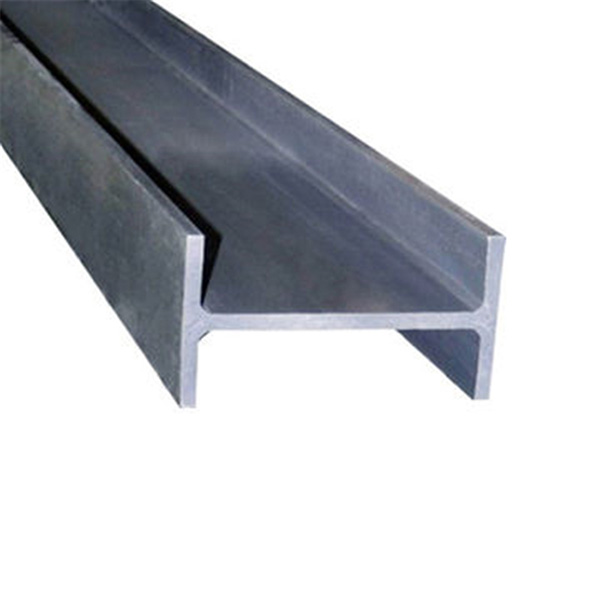
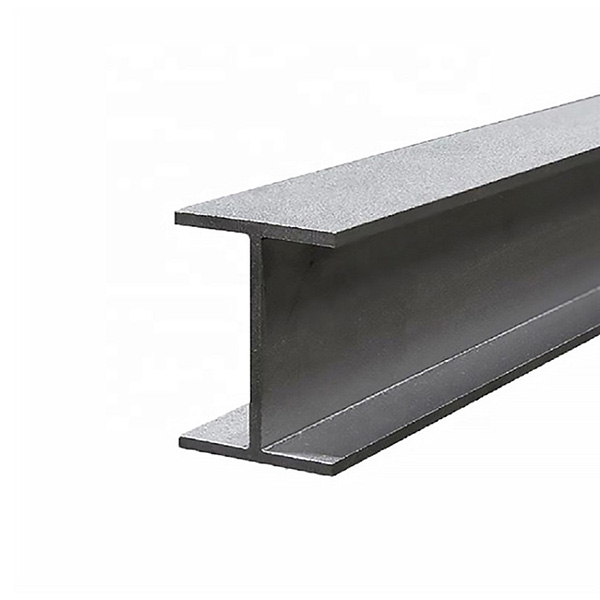
I-beams (also called I-sections or standard beams) are hot-rolled structural steel beams with an I-shaped cross-section consisting of two flanges connected by a thinner web. Compared with H-beams (wide-flange beams), traditional I-beams typically have narrower flanges relative to the web depth and may feature tapered flanges (especially older series).
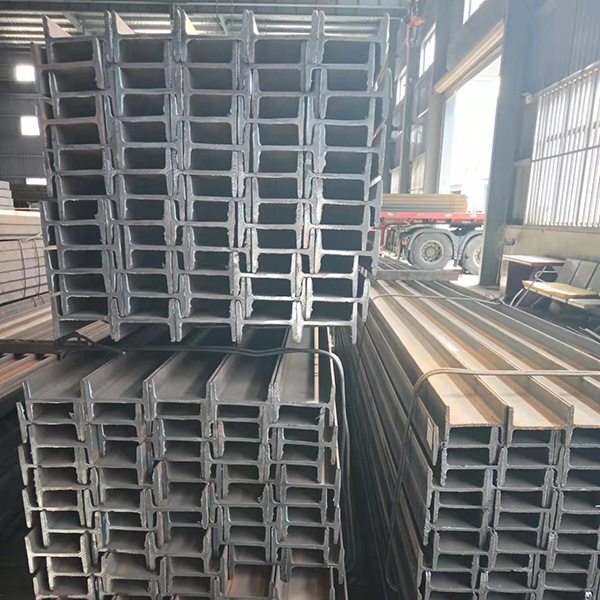
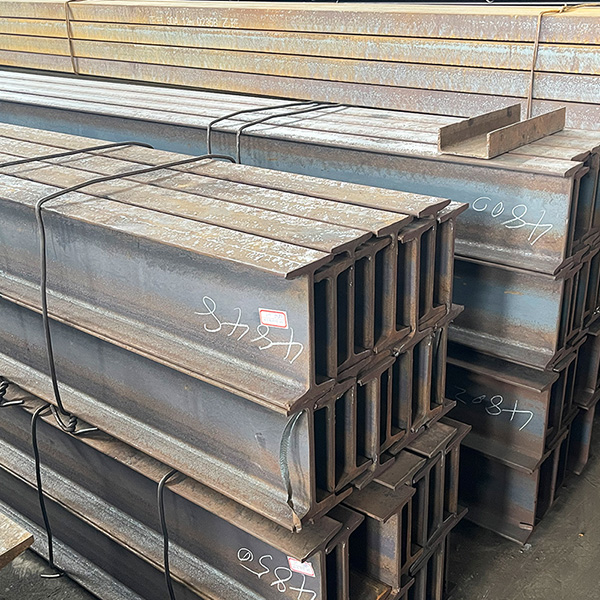
Typical depths range from about 80 mm to 600 mm (and larger in some series). Standard lengths are commonly 6 m, 9 m, 12 m or cut-to-length. They are widely used as floor beams, secondary beams, columns in lighter frames, and general structural members.
Key international standards include:
• EN 10365 – Hot-rolled steel channels, I and H sections – Dimensions and masses (covers IPE parallel-flange I-beams)
• EN 10024 – Hot-rolled taper flange I sections – Tolerances on shape and dimensions (IPN / INP series)
• EN 10034 – Structural steel I and H sections – Tolerances on shape and dimensions
• EN 10025 (Parts 1–6) – Technical delivery conditions for structural steels (material grades)
• ASTM A6/A6M – General requirements for rolled structural steel shapes; ASTM A36, A572 (United States) – S-shapes (American Standard Beams)
• GOST 8239 / GOST 26020 – Russian / CIS dimensional standards for I and H beams
• JIS G 3192 / JIS G 3101 / G 3106 – Japanese dimensional and material standards
• GB/T 706 / GB/T 11263 – Chinese standards for I-beams and H-beams
Classification is based primarily on yield strength, impact toughness (Charpy), delivery condition, and intended application. Material grades for I-beams are essentially the same as those used for plates, H-beams and other structural sections under the respective standards.
2. European Standards (EN 10025 + EN 10365 / EN 10024 / EN 10034)
Main I-beam series in Europe:
• IPE – Parallel flange I-beams (most common modern series; covered by EN 10365)
• IPN (or INP) – Taper flange I-beams (traditional series; tolerances in EN 10024)
• HEA / HEB / HEM – Wide-flange H-beams (covered in the companion H-Beam document)
Grades are designated by minimum yield strength (MPa) at thickness ≤16 mm, followed by a quality designation indicating impact toughness.
2.1 Common Structural Grades (EN 10025-2 Non-alloy)
Grade | Yield ≤16 mm (MPa) | Tensile ≤16 mm (MPa) | Typical Elongation | Typical Use |
S235JR/J0/J2 | 235 | 360–510 | ≥24–26% | General construction, light frames, secondary beams |
S275JR/J0/J2 | 275 | 410–560 | ≥21–23% | Buildings, industrial frames, floor beams |
S355JR/J0/J2/K2 | 355 | 470–630 | ≥20–22% | Primary beams, bridges, heavier structures |
S420 / S460 | 420 / 460 | 520–680 / 540–720 | — | High-strength long-span or heavily loaded beams |
Quality designations (impact toughness):
• JR – Charpy V-notch ≥27 J at +20 °C
• J0 – ≥27 J at 0 °C
• J2 – ≥27 J at −20 °C
• K2 – ≥40 J at −20 °C (higher toughness)
2.2 Yield Strength vs Thickness (EN 10025)
Minimum yield strength decreases with increasing thickness (same rules as for plates and H-beams):
Thickness band | S235 | S275 | S355 | S420 | S460 |
≤16 mm | 235 | 275 | 355 | 420 | 460 |
>16–40 mm | 225 | 265 | 345 | 400 | 440 |
>40–63 mm | 215 | 255 | 335 | 390 | 430 |
>63–80 mm | 215 | 245 | 325 | 370 | 410 |
>80–100 mm | 215 | 235 | 315 | 360 | 400 |
2.3 Dimensional Standards
Common size ranges:
• IPE (parallel flange): depths approximately 80–600 mm (most widely used modern I-beam series)
• IPN / INP (taper flange): traditional series with tapered flanges
Designation example: IPE 300 or IPN 200 – steel EN 10025-2 – S355JR.
Tolerances: EN 10034 applies to parallel-flange I and H sections; EN 10024 applies to taper-flange I sections.
2.4 Other EN 10025 Parts Applicable to I-Beams
• EN 10025-3: Normalised / normalised-rolled fine-grain steels (S275N/NL, S355N/NL, S420N/NL, S460N/NL)
• EN 10025-4: Thermomechanically rolled fine-grain steels (S275M/ML, S355M/ML, S420M/ML, S460M/ML)
• EN 10025-5: Steels with improved atmospheric corrosion resistance (weathering steels, e.g. S355J0W, S355J2W)
• EN 10025-6: Quenched and tempered high-strength steels (S460Q/QL to S960Q/QL)
3. United States Standards (ASTM)
ASTM A6/A6M governs dimensional requirements and tolerances for structural shapes including American Standard Beams (S-shapes). Material grades are covered by separate specifications. Note that modern US construction predominantly uses wide-flange W-shapes (see H-Beam document); S-shapes remain available for specific applications.
3.1 Common Structural & HSLA Grades
Grade / Spec | Min Yield (MPa) | Tensile (MPa) | Typical Applications / Notes |
ASTM A36 | 250 (36 ksi) | 400–550 | General structural; common for S-shapes |
ASTM A572 Gr.50 | 345 (50 ksi) | 450 min | High-strength structural applications |
ASTM A992 | 345 (50 ksi) | 450–620 | Primarily for W-shapes; may be dual-certified for some beams |
ASTM A572 Gr.55/60/65 | 380–450 | 485–550+ | Higher-strength HSLA applications |
ASTM A588 / A709 | 345 (50 ksi) | 485 min | Weathering / bridge steels |
Designation example: S12×31.8 (approx. 12 in depth, 31.8 lb/ft). S-shapes have tapered flanges and are dimensionally different from European IPE sections.
3.2 Typical Size Ranges (ASTM)
• S-shapes: depths approximately 3 in to 24 in (limited range compared with W-shapes)
• Primarily used where the traditional tapered-flange profile is preferred or specified
4. CIS / Russian Standards
Common GOST specifications for hot-rolled I-beams include GOST 8239 (I-beams with tapered flanges) and related standards. Material grades follow GOST 380 and GOST 19281.
• St3ps / St3sp – Ordinary carbon structural (≈ S235 / A36)
• 09G2S, 10HSND, 15HSND – Low-alloy structural / bridge steels (≈ S355 / A572 Gr.50)
• Q235 / Q345 equivalents under Chinese GB/T also widely referenced
• Delivery conditions: hot-rolled, normalised, thermomechanically rolled
5. Approximate Cross-Standard Grade Equivalences
The following table provides commonly accepted approximate equivalences for commercial structural grades used for I-beams. Exact chemical and mechanical requirements (especially impact toughness and thickness ranges) should always be verified against the specific standard edition.
EN 10025 | ASTM | JIS (approx.) | China / GOST / Other |
S235JR | A36 | SS400 | Q235B / St3sp |
S275JR | A36 (higher) / A572 Gr.42 | SS490 | Q275 / St4sp |
S355JR / J2 | A572 Gr.50 / A992 | SM490A/B | Q345B / Q355 / 09G2S |
S420 / S460 | A572 Gr.60/65 | SM520 / SM570 | Q420 / Q460 |
S355J2W (weathering) | A588 / A709 Gr.50W | SPA-H | Q355NH |
6. High-Strength & Special Grades
Quenched & tempered / high-strength (EN 10025-6):
• S460Q/QL to S960Q/QL – Yield 460–960 MPa (less common for standard IPE sizes)
Thermomechanically rolled (EN 10025-4):
• S275M/ML, S355M/ML, S420M/ML, S460M/ML – improved toughness and weldability
Weathering steels:
• EN: S235J0W, S355J0W, S355J2W, S355K2W
• ASTM: A588, A709 Gr.50W
• JIS: SPA-H
7. Typical Applications
• Floor beams and secondary beams in buildings
• Light to medium primary frames
• Bridges – secondary girders, floor beams, bracing
• Industrial structures – platforms, mezzanines, equipment supports
• Agricultural and commercial buildings
• General structural members where narrower flanges are acceptable or preferred
8. Important Notes
• Yield strength decreases with increasing thickness; always use the value corresponding to the ordered thickness.
• Impact toughness (Charpy) requirements and test temperature are critical for low-temperature or structural safety applications.
• Delivery condition (as-rolled, normalised +N, thermomechanically rolled +M, quenched & tempered +Q) significantly affects properties and weldability.
• Carbon equivalent (CEV) limits control weldability; higher-strength grades generally require preheat or special welding procedures.
• IPE (parallel flange) is the modern European standard; IPN (taper flange) is the traditional series. They are not dimensionally interchangeable.
• American S-shapes (tapered flanges) differ from both European IPE and from wide-flange W-shapes; verify properties when substituting.
• H-beams (wide-flange) generally provide better lateral stability and load capacity for the same depth; I-beams remain economical for many secondary applications.
• Dimensional tolerances are defined in EN 10034 / EN 10024 (Europe) and ASTM A6/A6M (US); always confirm mill certificates for critical projects.
• AOIN typically supply I-beams in depths from ~80 mm to 600 mm and lengths up to 12–18 m in grades from S235 to S460 / A572 and higher, in hot-rolled, normalised and TM conditions.