1. Introduction
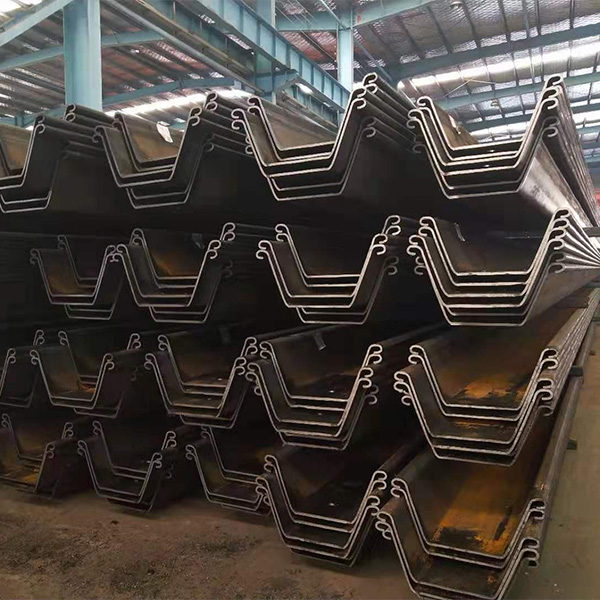
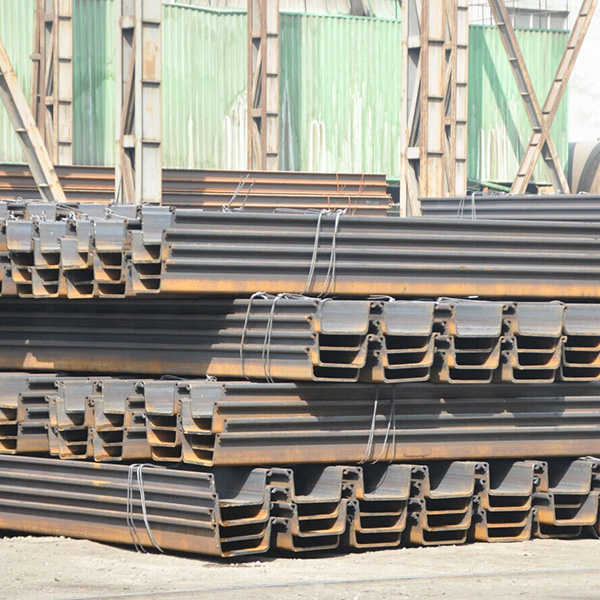
Steel sheet piles are interlocking structural sections driven into the ground to form continuous retaining walls, cofferdams, cut-off walls, quay walls and foundation systems. They provide both structural strength and soil/water retention.
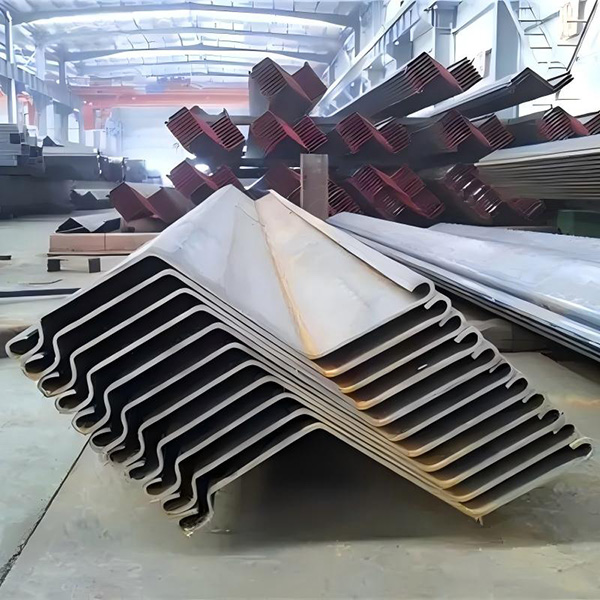
The two main manufacturing routes are hot-rolled (preferred for permanent and heavily loaded walls) and cold-formed (from coil, often used for temporary works or lighter applications). Common profiles include U-type (Larssen-style), Z-type, straight-web (AS) and combined wall systems (HZ/AZ with intermediate piles).
Key international standards include:
• EN 10248-1 – Hot-rolled steel sheet piles – Technical delivery conditions (material grades S240GP to S500GP)
• EN 10248-2 – Hot-rolled steel sheet piles – Tolerances on shape and dimensions
• EN 10249-1 / -2 – Cold-formed steel sheet piles – Technical delivery conditions and tolerances
• ASTM A328 – Steel sheet piling; ASTM A572 – HSLA structural steel (including sheet piling); ASTM A690 – High-strength low-alloy steel for marine environments
• JIS A5528 – Japanese standard for steel sheet piles (SY295, SY390, etc.)
• GB/T 20933 – Chinese standard for hot-rolled steel sheet piles
Classification is based primarily on yield strength, profile type (U, Z, straight web), manufacturing method (hot-rolled vs cold-formed) and any enhanced corrosion resistance.
2. European Standards – Hot-Rolled (EN 10248)
EN 10248-1:2023 covers non-alloy structural steel grades for hot-rolled sheet piles in quality GP. Grades are designated by minimum yield strength.
2.1 Steel Grades (EN 10248-1)
Grade | Yield ReH (MPa) | Tensile Rm (MPa) | Elong. % | Typical Use |
S240GP | 240 | 340 | ≥26 | Light / temporary works |
S270GP | 270 | 410 | ≥24 | General temporary / light permanent |
S320GP | 320 | 440 | ≥23 | Standard permanent walls |
S355GP | 355 | 480 | ≥22 | Most common / basis grade for permanent works |
S390GP | 390 | 490 | ≥20 | High-strength permanent walls |
S430GP | 430 | 510 | ≥19 | Heavy-duty / high-load applications |
S460GP / S500GP | 460 / 500 | 530 / 580 | ≥17 / ≥15 | Very high strength (newer grades) |
S355GP is generally regarded as the standard “basis grade” for permanent sheet-pile walls. Higher grades allow thinner sections or longer design life.
2.2 Dimensional Standards & Profiles (EN 10248-2)
• U-sections (Larssen-type) – interlocking claws on the same side of the web
• Z-sections – interlocking claws on opposite sides; efficient for continuous walls
• Straight-web (AS) sections – used for circular cells and combined walls
• HZ / AZ combined wall systems – H-piles + intermediate sheet piles
Tolerances cover mass, length, height, thickness, width, straightness and ends out-of-square.
3. European Standards – Cold-Formed (EN 10249)
EN 10249 covers cold-formed sheet piles produced from hot-rolled coil. Grades are typically aligned with EN 10025 structural steels:
• S235JRC, S275JRC, S355J0C (and similar)
• Mechanical properties follow the corresponding EN 10025 grades with cold-forming effects considered
Cold-formed piles are commonly used for temporary works, lighter permanent walls and where tighter dimensional control or lower cost is required. Section moduli are generally lower than equivalent hot-rolled profiles.
4. United States Standards (ASTM)
ASTM specifications commonly applied to steel sheet piling:
Grade / Spec | Min Yield (MPa) | Tensile (MPa) | Typical Applications / Notes |
ASTM A328 | 270 (39 ksi) | — | Basic mild steel sheet piling (rarely produced today) |
ASTM A572 Gr.42 | 290 (42 ksi) | 415 min | HSLA structural / sheet piling |
ASTM A572 Gr.50 | 345 (50 ksi) | 450 min | Most common modern HSLA grade for sheet piles |
ASTM A572 Gr.55/60/65 | 380–450 | 485–550+ | Higher-strength applications |
ASTM A690 | 345 (50 ksi) | 485 min | Marine / splash-zone improved atmospheric corrosion resistance |
A572 Grade 50 is the most widely specified modern grade in North America. A690 offers enhanced corrosion resistance in marine splash zones.
5. Japanese, Chinese & Other Standards
Japan (JIS A5528):
• SY295 – Yield ≈ 295 MPa
• SY390 – Yield ≈ 390 MPa
• Higher grades (SYW series) also available
China (GB/T 20933):
• Q345P, Q390P, Q420P (and similar) – aligned with structural grades for sheet piles
Special / proprietary grades:
• AMLoCor® (ArcelorMittal) – improved corrosion resistance for marine environments (Blue 320 / 355 / 390)
• Copper-bearing steels for enhanced atmospheric corrosion resistance
6. Approximate Cross-Standard Grade Equivalences
The following table provides commonly accepted approximate equivalences. Exact requirements (especially chemical composition, impact toughness and thickness ranges) must be verified against the ordered specification.
EN 10248 | ASTM (approx.) | JIS (approx.) | Notes |
S240GP / S270GP | A328 / A572 Gr.42 | SY295 | Light / temporary |
S320GP / S355GP | A572 Gr.50 | SY390 | Standard permanent works |
S390GP / S430GP | A572 Gr.55/60 | SYW390 / higher | High-strength permanent |
S460GP / S500GP | A572 Gr.65 / higher | — | Very high strength |
Special (AMLoCor / Cu) | A690 | — | Marine / improved corrosion |
7. Typical Applications
• Permanent retaining walls and quay walls in ports and harbours
• Cofferdams for bridge piers, foundations and marine construction
• Cut-off walls and groundwater control
• River and canal bank protection / flood defence
• Foundation walls and underground structures
• Temporary excavation support
• Combined walls (sheet piles + H-piles or tubes) for heavy loads
8. Important Notes
• Hot-rolled piles (EN 10248) generally offer higher section moduli and better interlock strength than cold-formed piles of similar mass.
• S355GP (or A572 Gr.50) is the most widely specified “standard” grade for permanent works; higher grades (S390GP, S430GP, S460GP) allow section optimisation or increased design life.
• Corrosion allowance (sacrificial thickness) or protective coatings / cathodic protection must be considered for permanent marine and aggressive soil environments.
• Enhanced corrosion grades (A690, AMLoCor®, copper-bearing steels) are preferred in splash zones and marine applications.
• Driving stresses, interlock integrity and water-tightness of the wall depend on profile geometry, steel grade and installation method.
• Dimensional and mass tolerances are defined in EN 10248-2 (hot-rolled) and EN 10249-2 (cold-formed); ASTM A6 applies for US practice.
• Design of sheet-pile walls is governed by geotechnical and structural codes (Eurocode 7 / 3, AASHTO, local codes) in addition to the material standards listed above.