1. Introduction
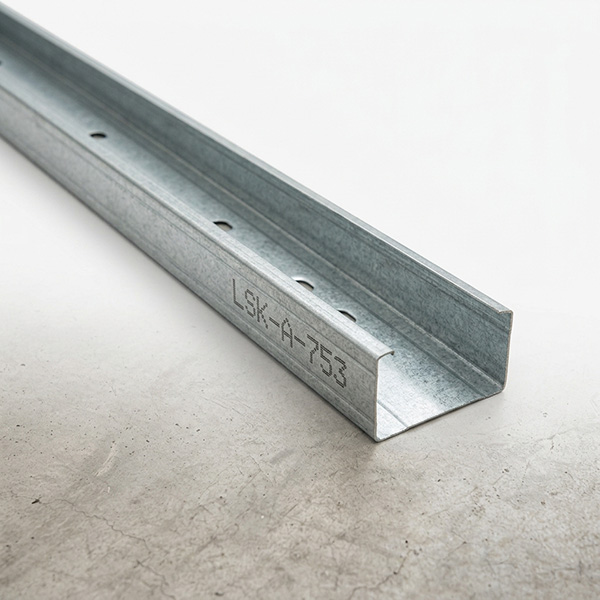
Light steel keel (also called light gauge steel framing, metal studs and tracks, or cold-formed steel keel) refers to thin-gauge cold-formed steel sections used primarily for non-load-bearing or light-load interior partition walls, suspended ceilings, and drywall systems. In some markets the term also covers light structural framing for low-rise buildings.
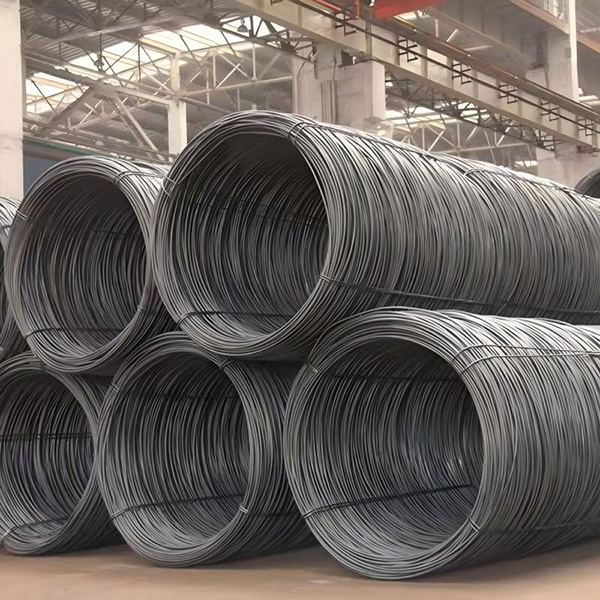
The sections are roll-formed from continuous hot-dip galvanized (or galvalume) steel coil. Common profiles include C-shaped studs (vertical members), U-shaped tracks (top and bottom runners), main ceiling keels, secondary (cross) keels, and various accessories (connectors, hangers, clips).
Typical thicknesses range from 0.4 mm to 1.5 mm (most common 0.5–1.0 mm for interior partitions and ceilings). Widths (web depths) commonly range from 50 mm to 150 mm for wall studs and 38–60 mm for ceiling systems.
Key international standards include:
• EN 10346 – Continuously hot-dip coated steel flat products (material grades S250GD, S280GD, S350GD, etc.)
• EN 10162 – Cold-rolled steel sections – Tolerances
• EN 1993-1-3 – Eurocode 3 – Cold-formed members and sheeting
• ASTM A653 / A1003 – Steel sheet, zinc-coated (galvanized) for structural / framing use
• AISI S100 / S220 – North American specifications for cold-formed steel structural members and framing
• GB/T 11981 – Light steel keels for building (China)
• AS/NZS 4600 – Cold-formed steel structures (Australia / New Zealand)
Classification is based on material grade (yield strength of the base metal), coating mass, thickness, profile type (C-stud, U-track, ceiling keel), and intended application (partition, ceiling, light structural).
2. Material Grades (Base Steel)
Light steel keels are manufactured from continuously hot-dip coated steel coil. The mechanical properties are those of the base metal after coating.
2.1 Common European Grades (EN 10346)
Grade | Yield (MPa) | Tensile (MPa) | Elongation | Typical Use |
S250GD | 250 | 330 | ≥19% | Standard partition and ceiling keels |
S280GD | 280 | 360 | ≥18% | Higher-strength partitions / light structural |
S320GD / S350GD | 320 / 350 | 390 / 420 | ≥17% / ≥16% | Structural light-gauge framing, longer spans |
DX51D / DX52D | — (forming grades) | 270–500 range | High | General forming; lower structural requirement |
2.2 Common North American Grades (ASTM)
Grade / Spec | Min Yield (MPa / ksi) | Coating | Typical Use |
ASTM A653 SS Grade 33/37/40 | 230–275 / 33–40 | G40–G90 | Standard metal studs and tracks |
ASTM A653 SS Grade 50 | 340 / 50 | G60–G90 | Higher-strength framing |
ASTM A1003 | Various (structural framing) | As specified | Cold-formed steel framing members |
3. Coatings & Corrosion Protection
Because light steel keels are thin-gauge and often used in interior environments that may experience humidity, a metallic coating is essential.
Coating Type | Typical Mass | Standard | Recommended Environment |
Zinc (Z / HDG) | Z100–Z275 (most common Z120–Z180) | EN 10346, ASTM A653 | Interior dry to moderate humidity |
Zinc-aluminium (ZA) / Galvalume (AZ) | AZ100–AZ150 | EN 10346, ASTM A792 | Higher corrosion resistance |
Zinc-magnesium (ZM) | ZM90–ZM120+ | EN 10346 | Aggressive / coastal interior environments |
For standard interior drywall partitions, Z120 to Z180 (or G40–G60 in US practice) is commonly specified. Higher coating masses are used where moisture risk is elevated.
4. Common Profiles & Dimensions
Wall systems:
• C-shaped studs (vertical) – web 50–150 mm, flange 30–50 mm, thickness 0.5–1.2 mm
• U-shaped tracks (top & bottom runners) – matching web size, slightly larger to receive the stud
Ceiling systems:
• Main keel (carrying channel) – typically 38–60 mm high
• Secondary / cross keel (furring channel) – smaller profile that clips or screws to the main keel
• Wall angle / perimeter trim
Chinese standard (GB/T 11981) series examples:
• C50, C75, C100, C150 – wall stud series
• U50, U75, U100, U150 – corresponding tracks
• Ceiling main keel and secondary keel designations per the national standard
5. Design & Product Standards by Region
Region | Material / Product | Design / Framing |
Europe | EN 10346, EN 10162 | EN 1993-1-3 (Eurocode 3 – cold-formed) |
USA / Canada | ASTM A653, A1003 | AISI S100 / S220 (framing), IBC references |
China | GB/T 11981, GB/T 2518 | Related national design codes for light steel |
Australia / NZ | AS 1397 (coated steel) | AS/NZS 4600 (cold-formed steel structures) |
6. Light Steel Keel vs Structural Cold-Formed Sections
Aspect | Light Steel Keel (Partition/Ceiling) | Structural CFS (e.g. C/Z purlins) |
Typical thickness | 0.4–1.2 mm | 1.2–3.5 mm+ |
Primary use | Interior partitions, ceilings, drywall | Roof purlins, wall girts, structural framing |
Load level | Light / non-load-bearing or very light | Structural (wind, snow, dead loads) |
Common grades | S250GD–S350GD / SS33–50 | S350GD–S550GD / G450–G550 |
7. Typical Applications
• Interior partition walls (drywall / gypsum board systems)
• Suspended ceilings (exposed or concealed grid)
• Light non-load-bearing walls in commercial and residential buildings
• Shaft walls, corridor walls and fire-rated assemblies (with appropriate board and insulation)
• Furring and lining systems
• Light structural framing for low-rise modular or light-gauge steel buildings (heavier gauges)
• Acoustic and thermal partition systems
8. Important Notes
• Light steel keels are cold-formed; design follows cold-formed steel rules (effective widths, local buckling) rather than hot-rolled section rules.
• Coating mass must be appropriate to the service environment; interior dry spaces can use lighter coatings than humid or coastal interiors.
• Stud spacing, track fixing, bridging and board attachment details are critical for performance (especially for fire, acoustic and impact resistance).
• Fire-rated assemblies require tested systems (stud + board + insulation combinations) rather than individual component ratings.
• Dimensional tolerances and straightness affect the quality of the finished wall or ceiling surface.
• Compatibility of fasteners (self-drilling screws) with the steel thickness and coating must be verified.
• For structural light-gauge applications (load-bearing walls, floors, roofs), higher grades, thicker material and full engineering design to AISI S100 / EN 1993-1-3 / AS/NZS 4600 are required.
• Always obtain material certificates confirming base metal grade, coating mass and thickness for project documentation.