1. Introduction
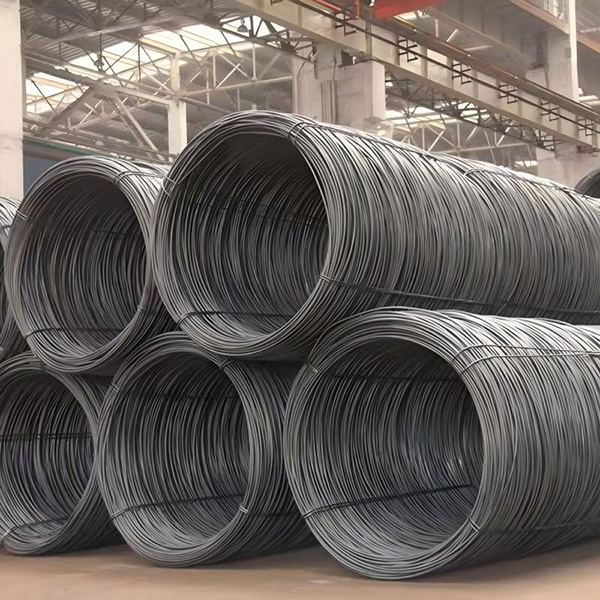
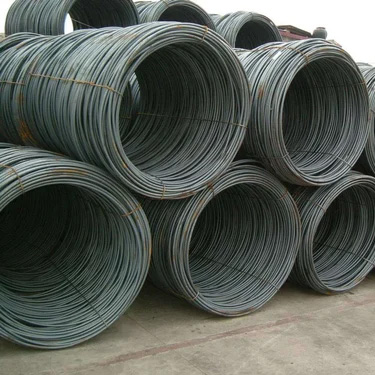
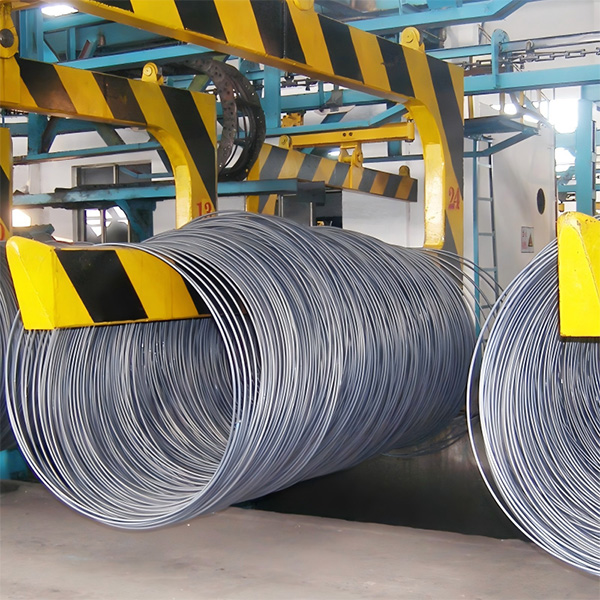
Wire rod is a hot-rolled steel product of round (or occasionally hexagonal/square) cross-section, supplied in coil form. It is the primary feedstock for subsequent cold drawing, cold rolling, or cold heading into wire, nails, fasteners, reinforcing wire, mesh, springs, welding wire, and many other products.
Typical diameters range from about 5.5 mm to 20 mm (most common 5.5–14 mm). Coils are usually 1–2.5 tonnes with internal diameters of approximately 850–950 mm. Surface quality, dimensional tolerance, chemical composition and microstructure are tightly controlled because they directly affect drawability and final product performance.
Key international standards include:
• EN 10016 (Parts 1–4) – Non-alloy steel rod for drawing and/or cold rolling
• EN 10025 – Structural steels (when wire rod is used for structural applications)
• ASTM A510/A510M – General requirements for wire rods and coarse round wire, carbon steel
• ASTM A1045 – Related specifications for wire rod
• JIS G 3505 – Low carbon steel wire rods; JIS G 3506 – High carbon steel wire rods
• GB/T 4354 – High carbon steel wire rods; GB/T 3429 / related Chinese standards
• ISO 16120 – Non-alloy steel wire rod for conversion to wire
Classification is based primarily on carbon content (low, medium, high), intended end use (drawing, welding, cold heading, reinforcing, spring, free-cutting), and surface/quality requirements.
2. European Standards (EN 10016)
EN 10016 is the principal European standard for non-alloy steel rod intended for drawing and/or cold rolling. It is divided into parts covering general requirements and specific quality groups.
2.1 Main Quality Groups & Typical Grades
Quality Group | Typical C range | Example Grades | Intended Use |
Low carbon (drawing) | ≤0.12–0.15% | C4D, C7D, C9D, C10D | Fine wire drawing, welding wire, mesh, fencing |
Medium carbon | 0.15–0.45% | C15D–C45D | General drawing, cold heading, fasteners |
High carbon | 0.45–0.90%+ | C50D–C80D / C82D | Springs, high-tensile wire, PC strand, tyre cord |
Welding quality | Low C, controlled S/P | S2, S3, S4 / specific welding grades | Electrode / welding wire feedstock |
Free-cutting / special | Various + S, Pb, etc. | 11SMnPb30, etc. | Machinability-critical applications |
The “D” suffix in EN 10016 grades indicates suitability for drawing. Chemical limits (C, Mn, Si, S, P, N, etc.) and residual elements are tightly controlled.
2.2 Key Quality Requirements
• Surface quality – absence of harmful seams, laps, scabs, and controlled scale
• Dimensional tolerance – typically ±0.3 mm or tighter for precision drawing grades
• Microstructure – controlled grain size, limited segregation, appropriate pearlite/ferrite balance for the carbon level
• Decarburisation – limited depth for high-carbon grades destined for springs or PC wire
• Cast analysis and product analysis limits defined for each grade
3. United States Standards (ASTM)
ASTM A510 provides general requirements for carbon steel wire rods. Specific end-use grades are covered by additional specifications or by customer chemistry ranges.
3.1 Common Categories
Category | Typical Carbon | Typical Applications |
Low-carbon wire rod | ≤0.15% | Fine wire, welding wire, mesh, nails, fencing, cold heading |
Medium-carbon wire rod | 0.15–0.45% | Fasteners, general wire, cold-drawn products |
High-carbon wire rod | 0.45–0.95%+ | Springs, PC strand, tyre cord, high-tensile wire, music wire |
Welding wire rod | Low C, low residuals | MIG/MAG, submerged-arc and stick electrode feedstock |
Alloy / special | Various | Alloy steels for specific drawing or heat-treatment needs |
Customers often specify chemistry ranges, surface quality classes, and mechanical property targets (as-rolled or after simulated drawing) in addition to the base ASTM standard.
4. Japanese, Chinese & Other Standards
Japan:
• JIS G 3505 – Low carbon steel wire rods (SWRM grades)
• JIS G 3506 – High carbon steel wire rods (SWRH grades)
• JIS G 3507 – Cold heading quality wire rods
China:
• GB/T 4354 – High carbon steel wire rods
• GB/T 3429 / related – Low and medium carbon wire rods
• Grades such as SWRH42A/B, SWRH57B, SWRH62A/B, SWRH67A/B, SWRH72A/B, SWRH77A/B, SWRH82A/B (high-carbon series)
ISO:
• ISO 16120 – Non-alloy steel wire rod for conversion to wire (aligned with European practice)
5. Approximate Cross-Standard Grade Equivalences
Exact equivalences depend on carbon content, residual elements and quality requirements. The table below gives indicative correspondences for common drawing-quality grades.
EN 10016 | ASTM / AISI (approx.) | JIS (approx.) | Typical End Use |
C4D–C10D | 1006–1010 / 1008 | SWRM6–SWRM10 | Fine wire, welding, mesh |
C15D–C25D | 1015–1025 | SWRM12–SWRM20 | General drawing, cold heading |
C35D–C45D | 1035–1045 | — | Medium-carbon fasteners, wire |
C50D–C80D | 1050–1080 / 1080+ | SWRH42–SWRH82 | Springs, PC wire, high-tensile |
6. Special & High-Performance Grades
High-carbon / spring / PC wire rod:
• Controlled residual elements, low inclusion content, restricted decarburisation – for tyre cord, PC strand, valve springs, music wire
Welding wire rod:
• Very low sulphur and phosphorus, controlled copper and nitrogen, clean steel practices
Cold-heading quality (CHQ):
• Excellent surface quality, controlled hardenability, spheroidise-annealed or annealable grades for fasteners
Free-cutting wire rod:
• Elevated sulphur (and sometimes lead or tellurium) for improved machinability
7. Typical Applications
• Drawn wire for fencing, mesh, nails, staples and general wire products
• Welding consumables (MIG/MAG, SAW, stick electrodes)
• Cold-heading and cold-forging stock for fasteners (bolts, screws, rivets)
• Spring wire (suspension, valve, mattress, mechanical springs)
• Prestressed concrete (PC) wire and strand
• Tyre cord and bead wire
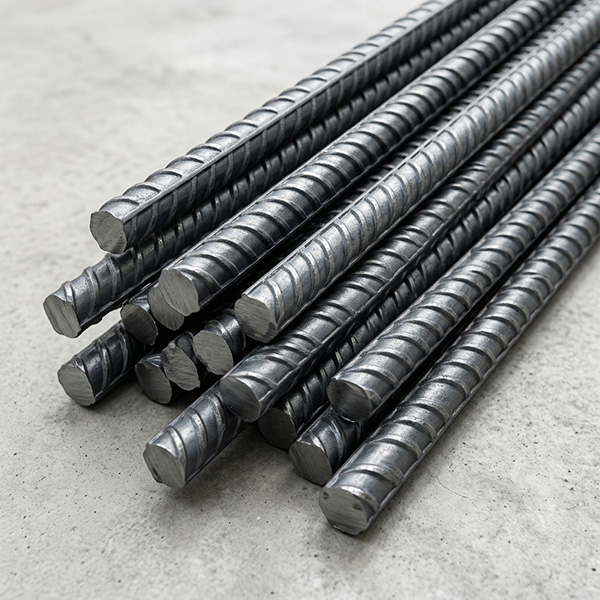
• Reinforcing wire and welded mesh feedstock
• Rope wire, music wire and specialty fine wires
8. Important Notes
• Wire rod quality is critical to downstream processing; surface defects, segregation or improper microstructure can cause breaks during drawing or failures in the final product.
• Carbon content is the primary determinant of strength and drawability; low-carbon grades are easiest to draw to fine sizes.
• High-carbon grades require careful control of cooling (Stelmor or equivalent) to obtain a suitable pearlitic microstructure for subsequent patenting or drawing.
• Dimensional tolerance, ovality and surface scale condition affect die life and process efficiency in the wire mill.
• Many end uses require additional customer specifications beyond the base standard (inclusion rating, residual limits, restricted decarburisation, special surface classes).
• Coil weight, packing and identification must be agreed to suit the drawing or processing line.