+86-13921132875
Inicio - Carbon Steel - Carbon Steel Plates & Sheets

Carbon Steel Plates & Sheets

Perforated Steel Sheets

  • Perforated Steel Sheets

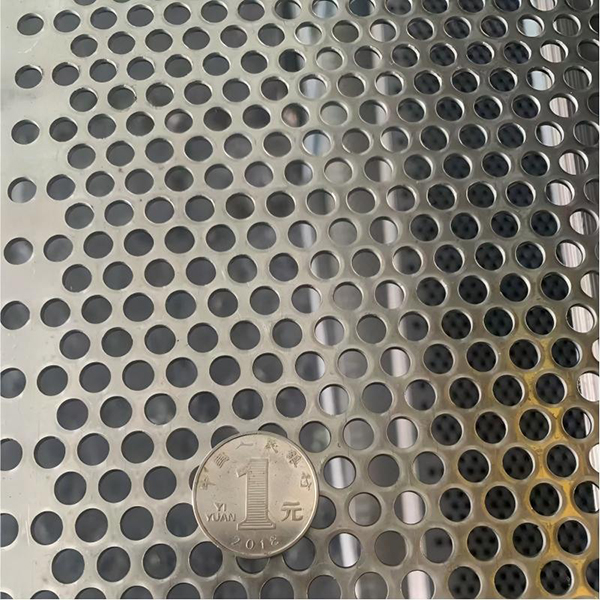
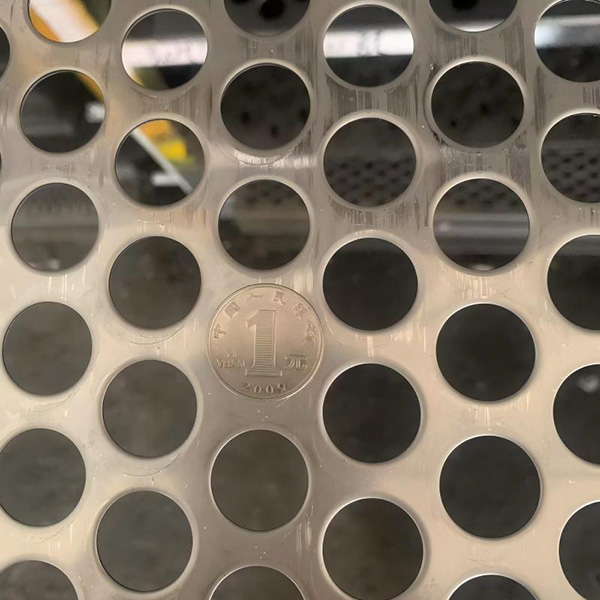
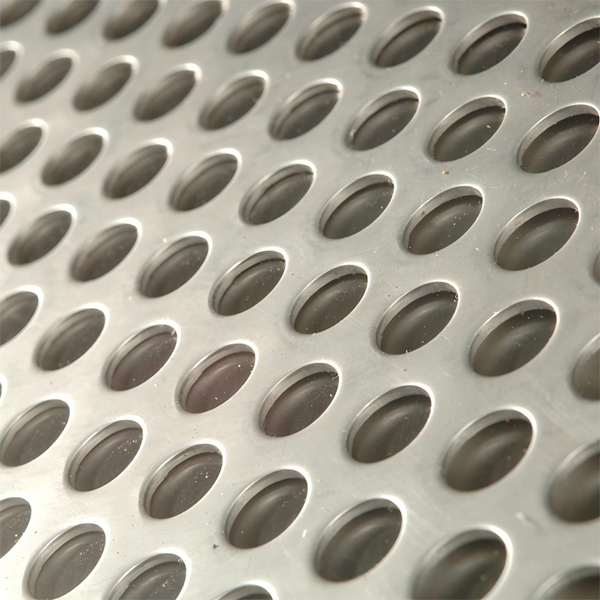
    Perforated steel sheets (also called perforated metal or punched sheet) are flat products in which a regular pattern of holes has been punched. They are used for filtration, screening, ventilation, acoustic control, architectural façades, guarding, and decorative applications. Key reference standards and guidelines:

    Product Details

    1. Introduction

    Perforated steel sheets (also called perforated metal or punched sheet) are flat products in which a regular pattern of holes has been punched. They are used for filtration, screening, ventilation, acoustic control, architectural façades, guarding, and decorative applications.

    Key reference standards and guidelines:

    • DIN 24041 / ISO 7805 – Perforated plates (terminology, patterns, designation)

    • Material standards: EN 10130 / ASTM A1008 (cold-rolled), EN 10025 / ASTM A36 (hot-rolled), ASTM A240 (stainless), EN 10346 / ASTM A653 (galvanized)

    • National and manufacturer pattern catalogues (P-codes, R/Q/H designations)

    2. Hole Shapes & Patterns

    The most common hole shapes and arrangements are defined in DIN 24041:

    Shape Code

    Description

    Typical Arrangement Codes

    R / RV / RD / RG

    Round holes

    Staggered (60° standard), 45° staggered, straight rows

    Q / QV / QD / QG

    Square holes

    Staggered or straight (aligned) rows

    H / HV

    Hexagonal holes

    Usually staggered

    L / LV / LG

    Oblong / slotted (round or square ends)

    Side-staggered, end-staggered or straight

    Decorative / Custom

    Special shapes

    Manufacturer-specific or CAD-defined

    Key dimensional terms: Hole diameter (or side length), Pitch (centre-to-centre spacing), Bridge (solid material between holes), Open Area (% of sheet that is open).

    3. Common Round-Hole Patterns (Examples)

    Hole Ø (mm)

    Pitch (mm)

    Open Area %

    Typical Thickness

    Notes

    1.0–1.5

    2.0–3.0

    23–35

    0.5–1.5 mm

    Fine filtration

    2.0–3.0

    3.5–5.0

    30–40

    0.8–2.0 mm

    General screening

    4.0–6.0

    6.0–9.0

    35–50

    1.0–3.0 mm

    Ventilation / guards

    8.0–12.0

    12–16

    40–55

    1.5–5.0 mm

    Architectural / heavy duty

    16–25

    20–35

    45–60

    2.0–10 mm

    Large open area

    Rule of thumb: hole diameter should normally be ≥ material thickness for economical punching in steel and aluminium.

    4. Base Materials

    Material

    Common Grades / Standards

    Typical Applications

    Mild / Carbon Steel

    DC01, S235JR, ASTM A36 / A1008

    General industrial, guards, screens

    Galvanized Steel

    DX51D+Z, ASTM A653

    Outdoor screening, architectural

    Stainless Steel

    304 / 316L (ASTM A240, EN 10088)

    Food, chemical, coastal, hygienic

    Aluminium

    1050, 3003, 5005, 5754

    Lightweight façades, sunscreens

    Pre-painted / Coated

    PPGI / PPGL substrates

    Decorative architectural panels

    5. Key Design Parameters

    • Open Area (%) – controls airflow, light transmission, acoustic performance and weight reduction

    • Pitch & Bridge – affect strength, stiffness and appearance

    • Margins (unperforated borders) – important for edge strength and fixing

    • Thickness – must be compatible with hole size and required structural performance

    • Surface finish – mill, galvanized, painted, polished, anodised, etc.

    6. Typical Applications

    • Filtration and screening (mining, agriculture, food processing)

    • Architectural façades, sunscreens, balustrades and decorative cladding

    • Acoustic panels and noise-control barriers

    • Machine guards, safety screens and ventilation grilles

    • Walkways, stair treads and platform flooring (with appropriate load design)

    • Speaker grilles, appliance panels and interior design elements

    7. Specification Checklist

    A complete order should define:

    • Base material and grade (e.g. DX51D+Z, 304 stainless, S235JR)

    • Thickness, width and length (or coil)

    • Hole shape, size and pattern (e.g. R 5 mm, 60° staggered, pitch 8 mm)

    • Open area percentage (or calculated from hole + pitch)

    • Margins (if required) and edge condition

    • Surface finish / coating and any post-treatment (deburring, galvanizing, painting)

    8. Important Notes

    • Higher open area reduces stiffness; support spacing or thickness may need to be increased.

    • Punching generates burrs; specify deburring if a smooth surface is required.

    • For structural use (walkways, platforms) design must consider residual strength after perforation.

    • Standard sheet sizes are commonly 1000×2000 mm, 1250×2500 mm, 1220×2440 mm; larger or coil material available by agreement.

    • Custom patterns, special margins and multi-layer or progressive perforating are widely available from specialist manufacturers.

    Industries Served

    Our expert staff helps customers across the country and across numerous industries find the stainless steel, carbon steel,roofing & wall Panels, nickel alloy and specialty metal products they need. From prototype component manufacturing to high-volume production runs, Aoin is your premier partner for your specialty metal needs.

    Frequently Asked Questions

  • Do you accept customized specifications and sizes?

    Yes, we supply products according to international standards (ASTM, EN, JIS, DIN) and can customize dimensions, thicknesses, coatings, and packaging according to your project requirements.
  • Do you provide Quality Certificates (MTC) and Certificates of Origin?

    Yes, we provide MTC complying with US standards (ASTM) and EN 10204 3.1, SGS/BV inspection reports, and Certificates of Origin for customs clearance.
  • What is the delivery time and MOQ?

    MOQ: 10-25 tons. Production time: 15-30 days after order confirmation.
  • Which countries do you export to?

    We export to Colombia, Guatemala, Venezuela, Peru, and all of Latin America. FOB/CIF supply available.
  • OTHER CUSTOMERS ALSO BOUGHT

  • Cold-Rolled Steel Sheets

    Cold-rolled steel sheets (also called cold-reduced or CR sheets) are produced by further cold rolling of hot-rolled pickled coils, followed by annealing (and usually temper rolling / skin-passing). They offer superior surface finish, tighter dimensional tolerances, higher strength and excellent formability compared with hot-rolled products. Typical thickness range is 0.3–3.0 mm.
    View product
  • Galvanized Carbon Steel Sheets

    Galvanized carbon steel sheets are continuously coated flat products consisting of a cold-rolled or hot-rolled carbon steel substrate with a zinc or zinc-alloy coating applied by the hot-dip process. These products offer excellent atmospheric corrosion resistance combined with good formability, strength and surface quality.
    View product
  • Hot-Rolled Steel Plates

    Hot-rolled steel plates (also called quarto plates or heavy plates) are flat products produced by hot rolling slabs on reversing or continuous plate mills. Thickness typically starts from about 3–6 mm and can reach 150–250 mm or more. They are widely used in construction, bridges, shipbuilding, pressure vessels, heavy machinery and pipelines.
    View product
  • Perforated Steel Sheets

    Perforated steel sheets (also called perforated metal or punched sheet) are flat products in which a regular pattern of holes has been punched. They are used for filtration, screening, ventilation, acoustic control, architectural façades, guarding, and decorative applications. Key reference standards and guidelines:
    View product
  • PPGI Steel Sheets

    PPGI (Pre-Painted Galvanized Iron/Steel) is steel sheet that has been hot-dip galvanized and then continuously coil-coated with an organic paint system (primer + topcoat). It is the most widely used pre-painted steel product for building applications worldwide.
    View product
  • PPGL Steel Sheets

    PPGL (Pre-Painted Galvalume / Aluzinc) is steel sheet that has first been continuously hot-dip coated with a 55% aluminium – 43.4% zinc – 1.6% silicon alloy (Galvalume / AZ coating) and then coil-coated with an organic paint system. Compared with PPGI (pure zinc substrate), the AZ coating provides significantly better corrosion resistance, especially in coastal, industrial and high-humidity environments, while also offering higher heat reflectivity.
    View product
  • Online Application
    If you have any needs or questions, please complete the following form
  • +86 13921132875
  • info@wuxi-aoin.com
  • Lun - Vie: 9:00 am - 5 pm
  • 303 Hennessy Rd, Wan Chai, HK