1. Introduction
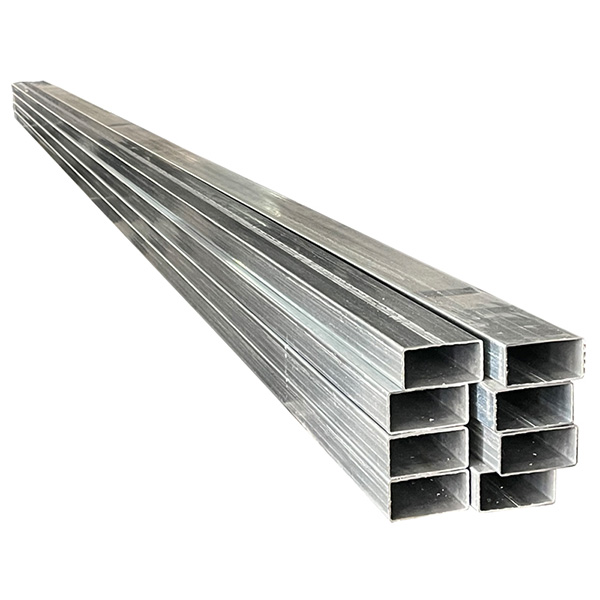
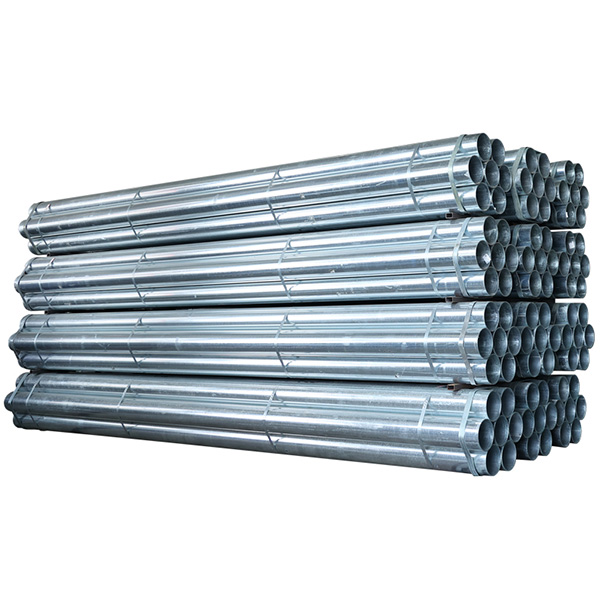
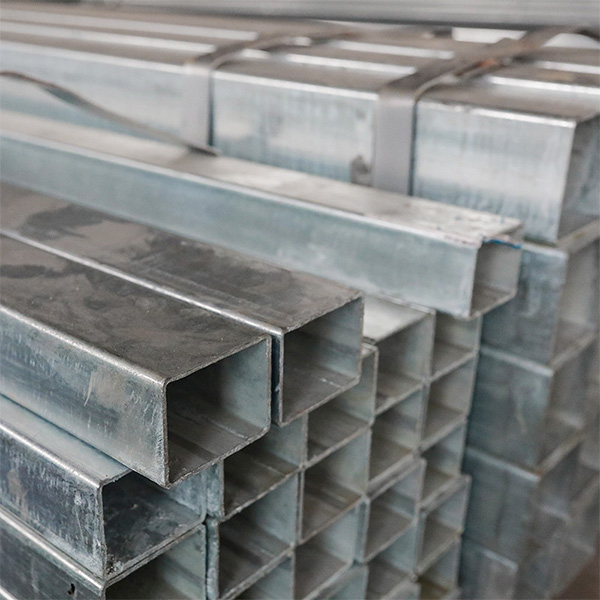
Pre-galvanized rectangular tubes (also called pre-galvanized RHS or GI rectangular tube) are rectangular hollow sections manufactured from continuously hot-dip galvanized steel strip (GI coil). The zinc coating is applied to the flat strip before the tube is formed and welded, resulting in a uniform zinc layer on the outer and inner surfaces (except for a narrow uncoated strip at the weld). They offer economical corrosion protection for light-to-medium structural applications where loading is predominantly about one axis.
Key related standards include:
• EN 10346 – Continuously hot-dip coated steel flat products (substrate)
• EN 10219 – Cold-formed welded structural hollow sections (tube geometry & mechanical properties)
• ASTM A653 – Zinc-coated (galvanized) steel sheet substrate
• ASTM A500 – Structural tubing (mechanical properties of the finished tube)
2. Substrate Grades
The base material is continuously hot-dip galvanized steel strip. Common forming and structural grades used for pre-galvanized tubes are:
EN Grade (EN 10346) | Approx. Equivalents | Typical Use in Pre-Galv Tube |
DX51D+Z | CS Type B / SGCC | General purpose, most common commercial grade |
S220GD / S250GD+Z | SS Grade 33/37 | Light structural applications |
S280GD / S350GD+Z | SS Grade 40/50 | Higher strength structural tubes |
3. Zinc Coating Mass
Designation | Min Total Coating (g/m²) | Typical Application |
Z40 - Z60 | 40 - 60 | Indoor or mild environments |
Z120 - Z150 | 120 - 150 | General outdoor use |
Z150 - Z180 | 150 - 180 | Most common for exterior structural use |
Z180 - Z200 | 180 - 200 | More severe environments |
Note: Pre-galvanized tubes have a continuous zinc coating on the outer and most of the inner surface. The longitudinal weld area is typically uncoated or has reduced coating; many manufacturers apply a zinc-rich repair or organic coating over the weld seam.
4. Finished Tube Mechanical Grades
The finished tube is commonly specified to the mechanical property requirements of structural hollow section standards:
EN 10219 Grade | Min Yield (MPa) | Tensile (MPa) | Approx. ASTM |
S235JRH | 235 | 360–510 | A500 Gr.B |
S275J0H / J2H | 275 | 410–560 | — |
S355J0H / J2H | 355 | 470–630 | A500 Gr.C / A1085 |
5. Typical Size Range
• Outside dimensions: typically 40×20 mm to 200×100 mm (larger sizes less common in pre-galvanized)
• Wall thickness: commonly 1.0–4.0 mm (most commercial demand 1.2–3.0 mm)
• Standard lengths: 6 m (custom lengths available)
• Common sizes: 50×25, 50×30, 60×40, 80×40, 100×50, 100×60, 120×60, 150×50, 150×100 mm
6. Comparison: Pre-Galvanized vs Hot-Dip Galvanized After Fabrication
Aspect | Pre-Galvanized Tube | Hot-Dip Galvanized After Fab. |
Coating process | Zinc applied to strip before forming | Whole tube dipped after welding/cutting |
Coating uniformity | Very uniform on strip; weld line may be thinner | Complete coverage including weld & ends |
Cost | Lower | Higher |
Suitability | Light–medium duty, indoor/mild outdoor | Severe outdoor, long-life, critical structures |
Appearance | Smooth, regular spangle | Typical HDG spangle / finish |
7. Typical Applications
• Light structural frames, purlins and secondary members
• Greenhouse and agricultural structures
• Scaffolding, temporary structures and formwork supports
• Furniture, shelving and racking systems
• Fencing posts, handrails and balustrades (mild environments)
• Cable trays, duct supports and general fabrication
8. Important Notes
• A complete specification should include: substrate grade + zinc coating mass + finished tube grade (if required) + outside dimensions (H × B) + wall thickness + length + surface condition.
• The longitudinal weld seam usually has reduced or no zinc coating; for outdoor use many suppliers apply a zinc-rich paint or organic coating over the weld.
• Pre-galvanized tubes are not recommended for highly corrosive or long-life critical outdoor structures without additional protection; full hot-dip galvanizing after fabrication is preferred in those cases.
• Cut ends and drilled holes expose bare steel; these areas should be touch-up protected after fabrication.
• RHS is preferred over SHS when loading is predominantly about one axis (higher section modulus in the required direction for the same mass).
• Dimensional tolerances generally follow EN 10219 or manufacturer standards for cold-formed hollow sections.