+86-13921132875
Inicio - Carbon Steel - Carbon Steel Pipes & Tubes

Carbon Steel Pipes & Tubes

Square Tube (SHS)

  • Square Tube (SHS)

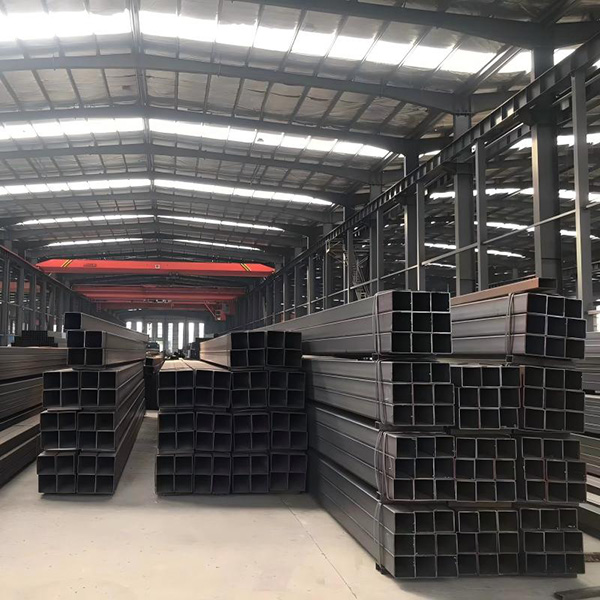
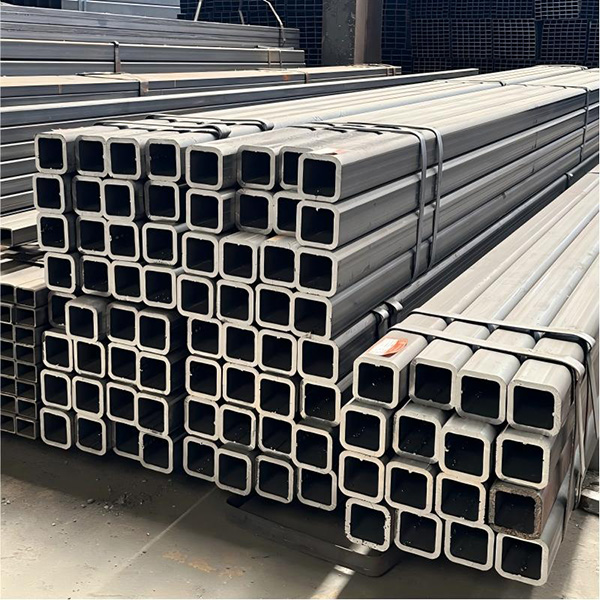
    Square tubes (Square Hollow Sections – SHS) are closed structural sections with equal side dimensions. They are produced either as cold-formed welded (most common) or hot-finished sections and are widely used for columns, frames, posts, trusses, machinery and architectural applications because of their high strength-to-weight ratio and equal properties about both axes.

    Product Details

    1. Introduction

    Square tubes (Square Hollow Sections – SHS) are closed structural sections with equal side dimensions. They are produced either as cold-formed welded (most common) or hot-finished sections and are widely used for columns, frames, posts, trusses, machinery and architectural applications because of their high strength-to-weight ratio and equal properties about both axes.

    Key international standards include:

    • EN 10219 – Cold-formed welded structural hollow sections of non-alloy and fine grain steels

    • EN 10210 – Hot-finished structural hollow sections of non-alloy and fine grain steels

    • ASTM A500 / A1085 – Cold-formed welded carbon steel structural tubing

    • JIS G 3466 – Carbon steel square and rectangular tubes for general structural purposes

    2. European Standards

    2.1 Common Grades (EN 10219 / EN 10210)

    Grade

    Yield (MPa)

    Tensile (MPa)

    Impact

    Typical Use

    S235JRH

    235

    360–510

    +20 °C

    General structural

    S275J0H / J2H

    275

    410–560

    0 / –20 °C

    Buildings, frames

    S355J0H / J2H

    355

    470–630

    0 / –20 °C

    Most common    high-strength

    S355K2H

    355

    470–630

    –20 °C (40 J)

    Higher toughness

    S420MH / S460MH

    420–460

    500–680

    —

    High-strength lightweight

    EN 10219 = cold-formed (economical, sharper corners). EN 10210 = hot-finished (more uniform properties, larger corner radii, preferred for fatigue/dynamic loading).

    3. United States Standards (ASTM A500 / A1085)

    Grade

    Min Yield

    Min Tensile

    Notes

    A500 Grade B

    46 ksi (317 MPa)

    58 ksi (400 MPa)

    Traditional common grade (round)

    A500 Grade C

    50 ksi (345 MPa)

    62 ksi (427 MPa)

    Preferred for square/rectangular

    A1085

    50 ksi (345 MPa)

    65 ksi (448 MPa)

    Tighter tolerances, toughness requirements

    4. Japanese & Chinese Standards

    Standard / Grade

    Approx. Yield

    Notes

    JIS G 3466 STKR400

    ≥245 MPa

    General structural

    JIS G 3466 STKR490

    ≥325 MPa

    Higher strength

    GB/T 6728 Q235

    ≈235 MPa

    Common Chinese structural

    GB/T 6728 Q345 / Q355

    ≈345–355 MPa

    Higher strength Chinese grades

    5. Approximate Cross-Standard Equivalences

    EN

    ASTM

    JIS

    China (typical)

    S235JRH

    A500 Gr.B

    STKR400

    Q235

    S275J0H/J2H

    —

    —

    Q275

    S355J2H

    A500 Gr.C / A1085

    STKR490

    Q345 / Q355

    6. Typical Size Range

    • Outside dimensions: typically 20×20 mm to 500×500 mm (larger sizes available by special agreement)

    • Wall thickness: commonly 1.5–16 mm (up to ≈40 mm for heavy sections)

    • Standard lengths: 6 m, 12 m (custom lengths available)

    • Common intermediate sizes: 40×40, 50×50, 60×60, 80×80, 100×100, 120×120, 150×150, 200×200 mm

    7. Typical Applications

    • Building frames, columns and posts

    • Trusses, space frames and roof structures

    • Machinery frames, conveyor supports and industrial equipment

    • Architectural elements, handrails and balustrades

    • Agricultural structures, greenhouses and fencing posts

    • Vehicle chassis, trailers and transport equipment

    8. Important Notes

    • Cold-formed (EN 10219) sections are more economical for static loading; hot-finished (EN 10210) are preferred for fatigue, seismic or dynamic applications.

    • Corner radius is larger on hot-finished sections; this affects connection design and aesthetics.

    • Weldability is generally good; carbon equivalent (CEV) and impact toughness should be checked for critical joints.

    • Galvanizing, painting or powder-coating is commonly applied for corrosion protection.

    • A complete specification should include: standard + grade + outside dimensions + wall thickness + length + surface condition / coating.

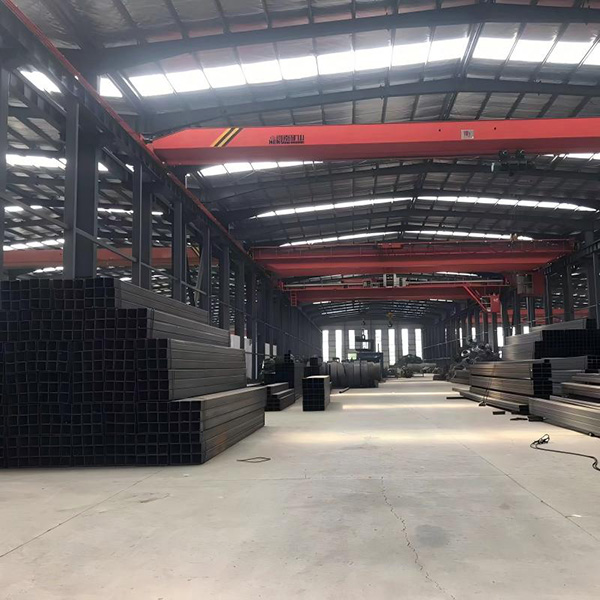
    Industries Served

    Our expert staff helps customers across the country and across numerous industries find the stainless steel, carbon steel,roofing & wall Panels, nickel alloy and specialty metal products they need. From prototype component manufacturing to high-volume production runs, Aoin is your premier partner for your specialty metal needs.

    Frequently Asked Questions

  • Do you accept customized specifications and sizes?

    Yes, we supply products according to international standards (ASTM, EN, JIS, DIN) and can customize dimensions, thicknesses, coatings, and packaging according to your project requirements.
  • Do you provide Quality Certificates (MTC) and Certificates of Origin?

    Yes, we provide MTC complying with US standards (ASTM) and EN 10204 3.1, SGS/BV inspection reports, and Certificates of Origin for customs clearance.
  • What is the delivery time and MOQ?

    MOQ: 10-25 tons. Production time: 15-30 days after order confirmation.
  • Which countries do you export to?

    We export to Colombia, Guatemala, Venezuela, Peru, and all of Latin America. FOB/CIF supply available.
  • OTHER CUSTOMERS ALSO BOUGHT

  • 3PE Anti-Corrosion Pipe

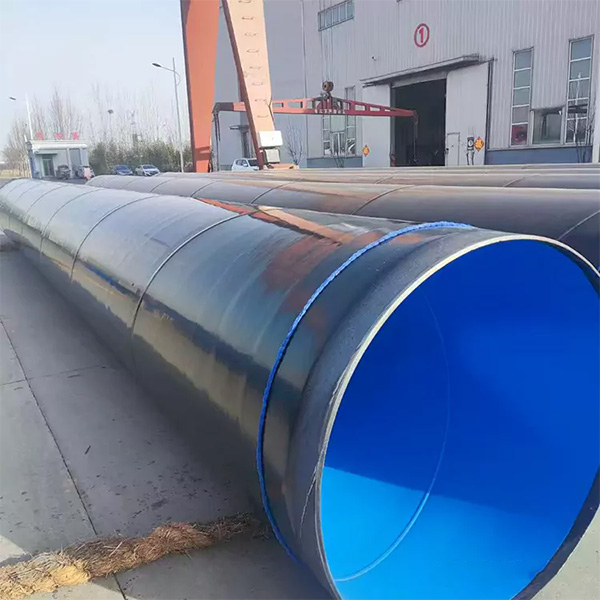
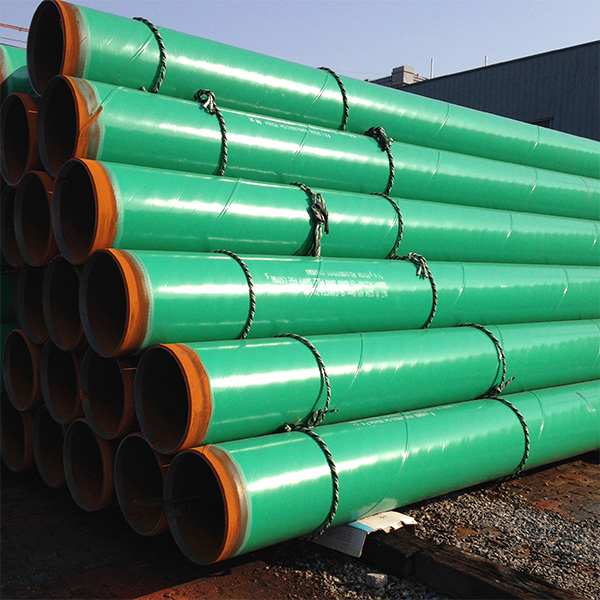
    3PE (Three-Layer Polyethylene) anti-corrosion coating is one of the most widely used external protection systems for buried and submerged steel pipelines. It consists of three layers applied to the cleaned steel pipe surface: a fusion-bonded epoxy (FBE) primer, an adhesive copolymer layer, and a high-density polyethylene (HDPE) outer layer. The system provides excellent resistance to corrosion, mechanical damage and cathodic disbondment.
    View product
  • API Casing and Tubing

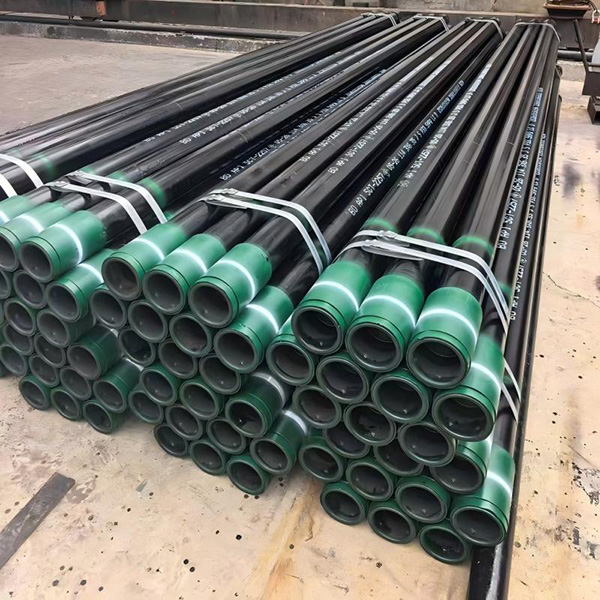
    API Casing and Tubing are specialized seamless or welded steel pipes used in oil and gas wells. Casing is the larger-diameter pipe that lines the wellbore and provides structural integrity; tubing is the smaller-diameter pipe through which oil or gas is produced to the surface. Both are manufactured and inspected according to API Specification 5CT (ISO 11960).
    View product
  • ERW Pipe

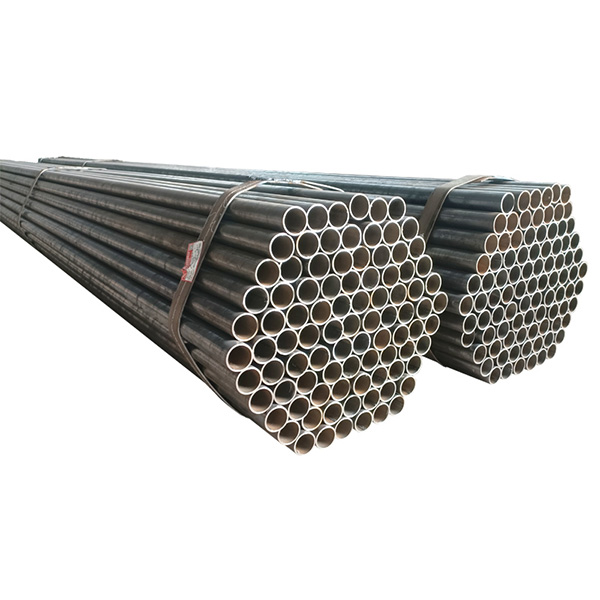
    ERW (Electric Resistance Welded) pipe is produced by cold-forming steel strip into a cylindrical shape and welding the longitudinal seam using high-frequency electric resistance welding (without filler metal). It is widely used for structural, mechanical, water, oil & gas and low-to-medium pressure fluid applications. ERW pipe offers good dimensional accuracy, smooth surface and economical production for diameters typically up to about 24–26 inches (610–660 mm).
    View product
  • Epoxy Powder Anticorrosive Steel Pipe

    Fusion Bonded Epoxy (FBE) coating is a high-performance thermosetting powder coating applied to steel pipe for external (and sometimes internal) corrosion protection. The epoxy powder is electrostatically sprayed onto a preheated pipe surface, where it melts, flows and cures to form a continuous, strongly adherent film. FBE is widely used as a standalone coating or as the primer layer in 3PE/3PP systems.
    View product
  • Galvanized Round Pipe

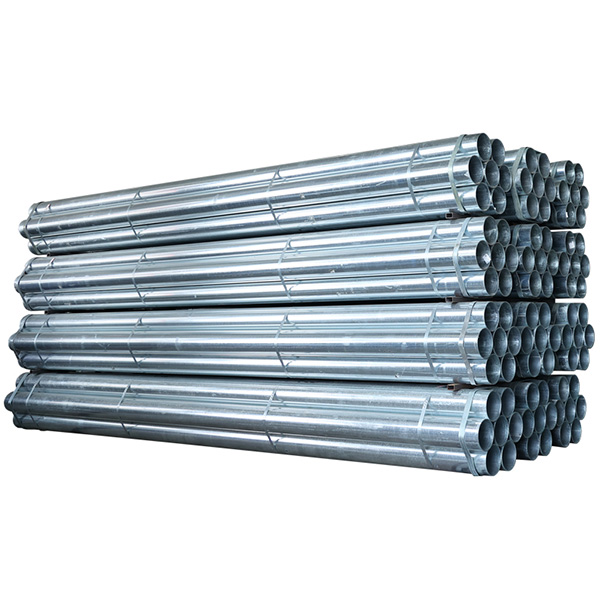
    Galvanized round pipe (also called GI pipe or hot-dip galvanized steel pipe) is carbon steel pipe that has been coated with zinc by the hot-dip process to provide corrosion protection. It is widely used for water supply, scaffolding, structural applications, fencing, fire protection and general mechanical purposes. The zinc coating may be applied either to the finished pipe (post-galvanized) or, less commonly for round pipe, to the strip before forming (pre-galvanized).
    View product
  • Hot-Dip Galvanized Rectangular Tube

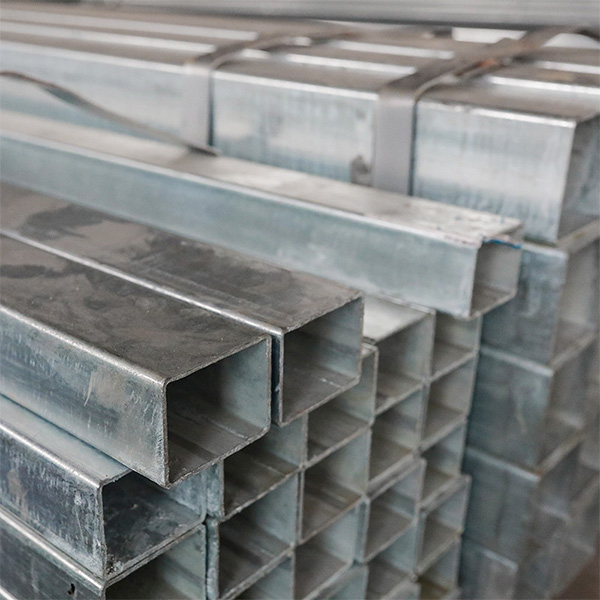
    Hot-dip galvanized (HDG) rectangular tubes are rectangular hollow sections that are fully immersed in a bath of molten zinc after forming, welding and cutting. This post-galvanizing process provides a complete, continuous zinc coating on all surfaces – outer, inner, weld seam and cut ends – offering superior long-term corrosion protection compared with pre-galvanized tubes. RHS is preferred when loading is predominantly about one axis.
    View product
  • Online Application
    If you have any needs or questions, please complete the following form
  • +86 13921132875
  • info@wuxi-aoin.com
  • Lun - Vie: 9:00 am - 5 pm
  • 303 Hennessy Rd, Wan Chai, HK